
- Intro
- What Are Cognitive Biases?
- Why human brain develops cognitive biases?
- Major Types of Cognitive Biases
- Cognitive Bias Examples
- How to Reduce Cognitive Biases
- Key Takeaways
- Conclusion
- Frequently Asked Questions About Cognitive Biases
- Sources and References
Intro
Frequently, you make hundreds of opinions every day.
You make Small decisions like: what to eat, what to watch or what route to take to go anywhere.
Other large decisions are like: choosing a career, deciding financial investments, or deciding to whom trust.
Maximum people believe that decisions they made are logical and rational. Actually here psychology shows something surprising that you won’t believe: Human brain is not a perfect rational or logical decision-making machine.
Human brain relies on the mental shortcuts that simplifies complex informations. These shortcuts help us to make quick decisions. However these can also lead to systematic thinking errors which are known as cognitive biases.
Cognitive biases influence how we understand the reality, remember events, explain information, and make decisions. They affect everything like personal relationships, financial choices, politics, healthcare, and business strategies etc.
The concept of cognitive biases became widely known through the research of psychologists Mr. Daniel Kahneman and Mr. Amos Tversky. Their work on guess and decision-making process, changed the way we understand human decision-making. Summery of their research you can find in book Thinking, Fast and Slow. This book explain how human thinking operates automatically and often irrationally/non-logically.
In this complete guide, you will learn:
- What are the cognitive biases
- Why human brain develops them
- Major types of cognitive biases
- Real-world examples of cognitive biases (how they affect decisions)
- Practical strategies to reduce the impact of cognitive biases
Understanding of these mental shortcuts can help you to become a better analyzer, smart decision-maker, and more critical consumer of information.
What Are Cognitive Biases?
A cognitive bias is a systematic error of thought processing. It affects how people process the information and make decisions.
Human brain not analyzes the every piece of information logically. It generally uses mental shortcuts knowen as heuristics. These shortcuts allow us to make quick judgments, but sometimes they can lead to inaccurate conclusions or error.
In simple terms:
Cognitive biases are patterns of thought processing. It deviates human from rational judgment.
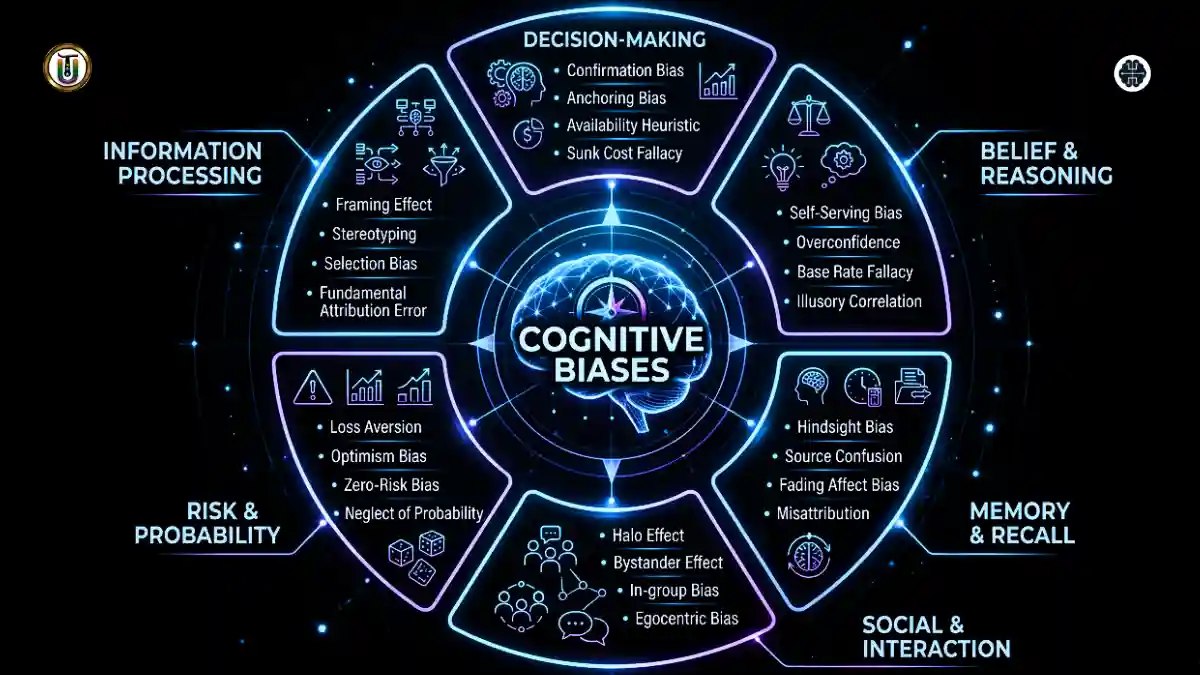
These biases impacts many aspects of thinking, like:
- Perception
- Memory
- Decision-making
- Problem solving
- Social interactions
Example: Anchoring Bias
let’s Imagine you want to buy a phone.
A store displays a sign:
“Original Price: ₹50,000 – Today Only ₹30,000.”

Even if ₹30,000 is still overpriced. The original price becomes an anchor in your mind. You feel deal is much attractive just Because of your brain compares the new price with the first number you saw.
This is called anchoring bias, and it is commonly used in marketing and negotiations.
Why human brain develops cognitive biases?
Cognitive biases are not signs of a poor intelligence or stupidity. In fact, they developed because the human brain needs the efficient ways to process large amounts of information.
Several factors contributes in the formation of cognitive biases.
1. Information Overload
Every second, your brain receives massive amounts of sensory data. Processing all of it logically would require large amount of mental efforts.
Biases helps to simplify this complexity by filtering information quickly.
2. Need for Speed
In early human history, quick decisions were essential for their survival. When facing a dangerous situations. There was no time for careful analysis.
Mental shortcuts allowed people to react instantly.
3. Emotional Influence
Human decisions are strongly influenced by emotions such as fear, excitement, anger, or hope. These emotions often shape how we render events and risks.
4. Social Influence
Humans are social beings. They rely on group behavior heavily. Following the crowd/trusting authority figures generally helps to maintain social harmony and cooperation.
5. Memory Limitations
Human memory is not a perfect recording of past events. Instead, it reconstructs experiences based on fragments of information, emotions, and context. This makes memory vulnerable to distortions.
Major Types of Cognitive Biases
There are 180+ cognitive biases according to Psychologists. Many of them are organized within the well-known framework called the Cognitive Bias Codex.
For simplicity, most biases can be grouped into several broad categories:
- Decision-Making Biases
- Social and Group Biases
- Memory Biases
- Belief and Perception Biases
- Statistical and Logical Biases
- Risk and Probability Biases
Each category highlights the different way the human brain can distort the information.
Decision-Making Biases
Decision-making biases influences the choices people make in everyday life. These affects financial decisions, career choices, purchasing behavior, and strategic planning.
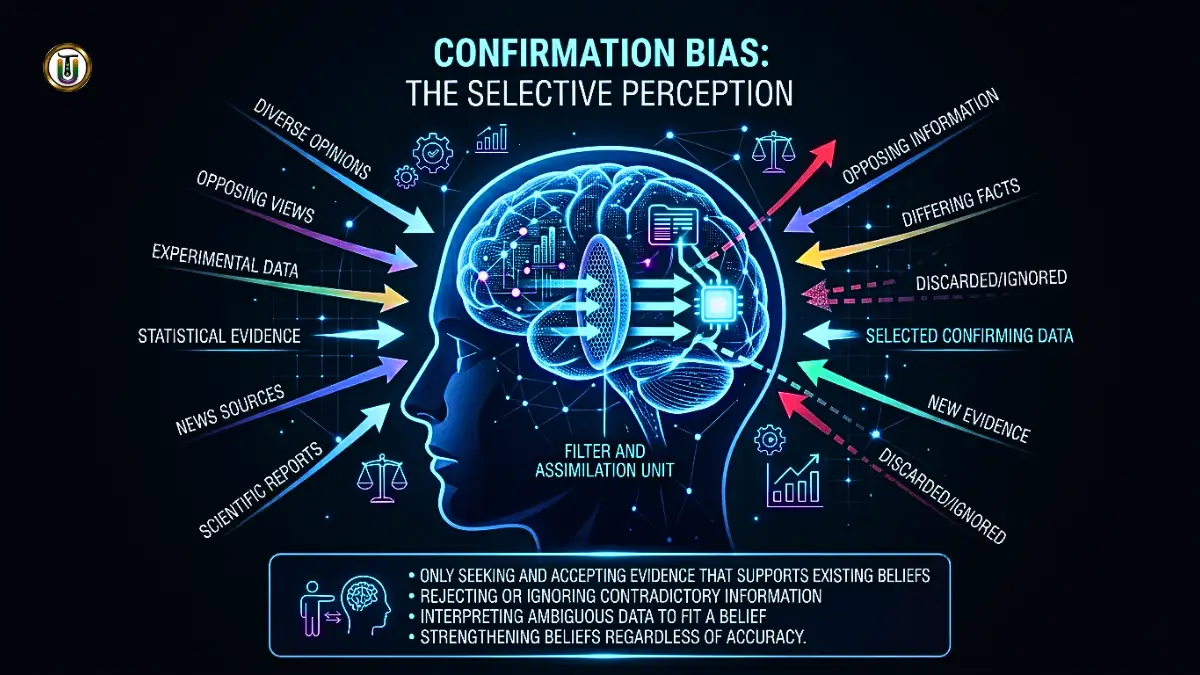
Decision making biases arise because the brain tries to simplify complex decisions using shortcuts.
Common Decision-Making Biases
Anchoring Bias
People depends on the first information they got while deciding something.
Availability Heuristic
Easy to remember events seem more probable than they are actually.
Overconfidence Bias
People often think they are more intelligent than they are actually. Whether it’s about their abilities, skills, or predicions.
Loss Aversion
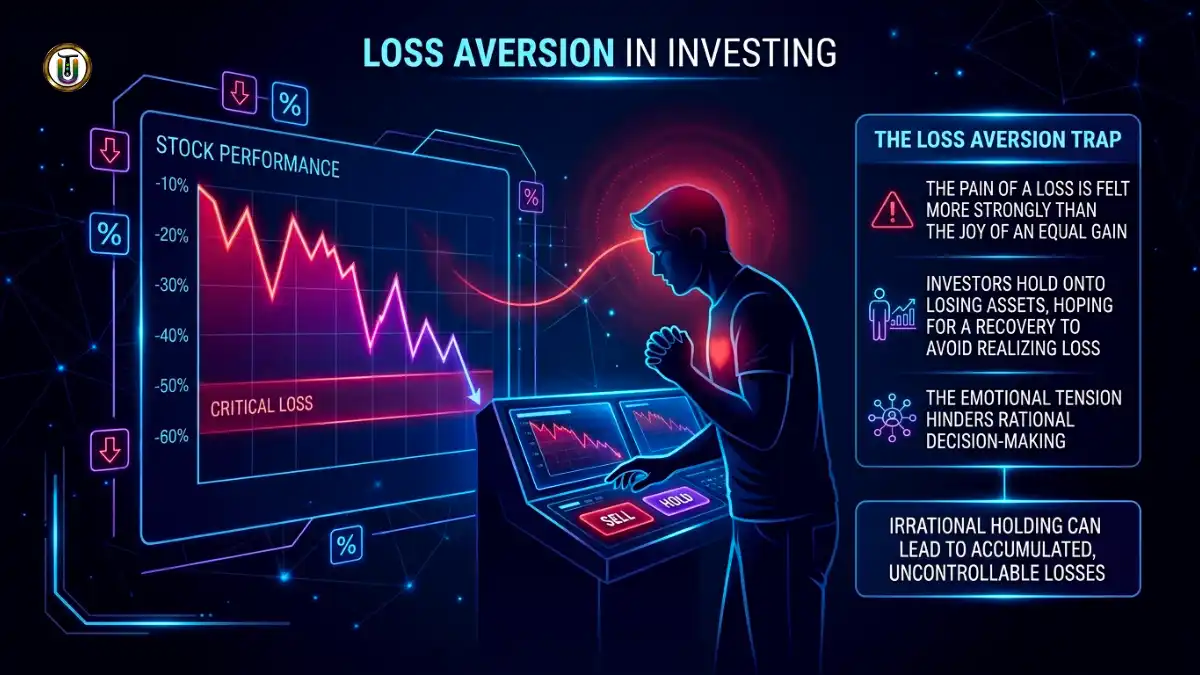
People feel the pain of losses more strongly than the pleasure of gains.
Framing Effect
The way information is presented influences how people interpret it.
Sunk Cost Fallacy
Most people continue investing in a failing project because they already invested their time, money, or efforts.
Status Quo Bias
Most people generally prefers existing conditions and resist the change.
Planning Fallacy
Most people consistently underestimate the time and resources required to complete tasks.
Why These Biases Matter
Decision-making biases influence important areas such as:
- Business strategy
- Financial investments
- Healthcare decisions
- Public policy
Recognizing these biases can help individuals and organizations make more rational/logical choices.
Social and Group Biases
Social biases occur when our judgments are influenced by social relationships, group identity, or authority figures.
Because humans evolved as social animals, group behavior strongly affects how we think and act.
Common Social Biases
Bandwagon Effect
People start adopting beliefs or behaviors because many others are doing the same.
Authority Bias
Individuals give greater importance to opinions from authority figures.
Halo Effect
A single positive trait influences overall judgment about a person.
Horn Effect
Even a single negative quality creates a negative impression overall.
In-Group Bias
Most people favor individuals generally who belong to their own group.
Stereotyping
Individuals attribute characteristics to others based on group identity.
Groupthink
Members of a group avoid expressing disagreement in order to maintain harmony.
Real-World Impact
Social biases influence many aspects of society, including:
- Political decisions
- Hiring practices
- Marketing strategies
- Education systems
- Legal judgments
Recognizing these biases can help organizations create fairer and more objective decision-making processes.
Memory Biases
Memory biases affect how people store and recall information. Unlike a video recording, human memory reconstructs events based on fragments of information.
As a result, memories can become distorted over time.
Common Memory Biases
Hindsight Bias
After an event occurs, people believe they predicted it beforehand.
False Memory
Individuals recall events differently from how they actually occurred.
Recency Effect
People remember the most recent information better than earlier information.
Primacy Effect
Information presented first is remembered more strongly.
Peak-End Rule
People judge experiences based mainly on their most intense moment and the ending.
Rosy Retrospection
Past experiences are remembered more positively than they were.
Why Memory Biases Matter
Memory distortions affect:
- Eyewitness testimony
- Personal relationships
- Historical interpretation
- Learning and education
Being aware of these biases helps people evaluate memories more critically.
Belief and Perception Biases
Belief biases influence how people interpret information and maintain their existing beliefs. These biases often cause individuals to ignore evidence that contradicts their worldview.
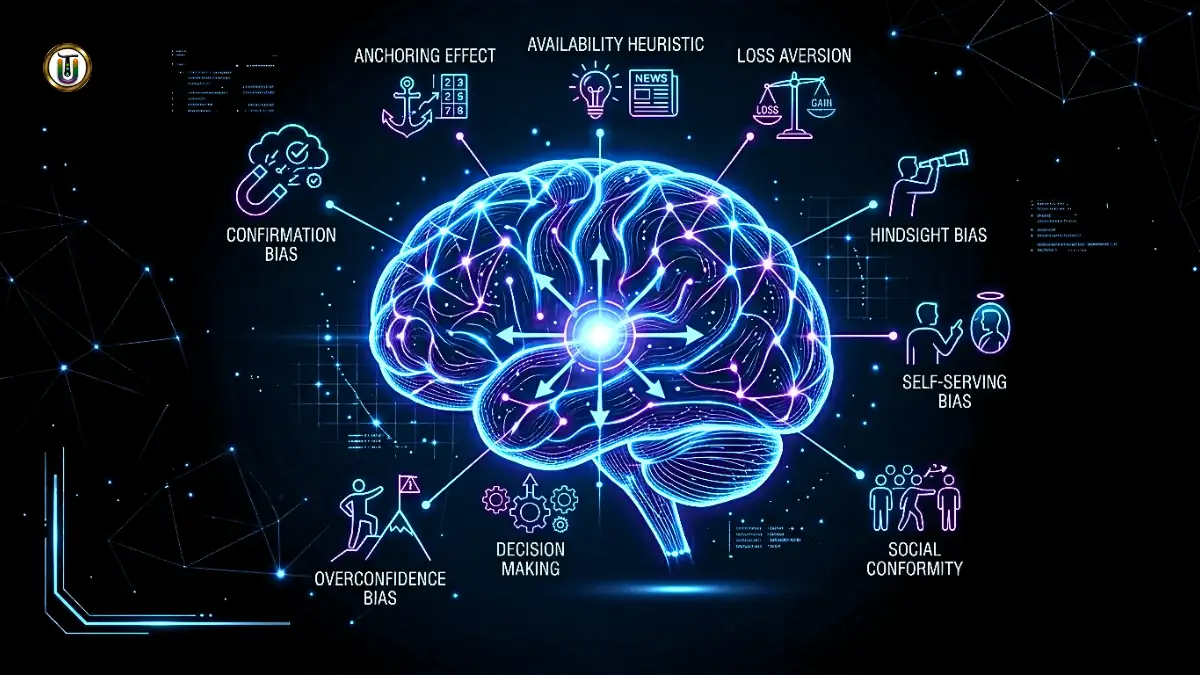
Common Belief Biases
Confirmation Bias
People seek information that supports their existing beliefs while ignoring opposing evidence.
Optimism Bias
Individuals believe they are less likely to experience negative events.
Negativity Bias
Negative experiences have a stronger psychological impact than positive ones.
Self-Serving Bias
Success is attributed to personal ability, while failure is blamed on external factors.
Dunning-Kruger Effect
People with limited knowledge often overestimate their competence.
Cognitive Dissonance
When beliefs and actions conflict, people feel psychological discomfort and try to rationalize their behavior.
Impact on Society
Belief biases influence:
- Political polarization
- Spread of misinformation
- Scientific skepticism
- Personal decision-making
Understanding these biases encourages open-minded thinking and intellectual humility.
Statistical and Logical Biases
Humans are not naturally good at interpreting statistics or probability. As a result, people often misunderstand randomness and patterns.
Common Statistical Biases
Gambler’s Fallacy
People believe past random events influence future outcomes.
Survivorship Bias
Success stories receive attention while failures are ignored.
Base Rate Neglect
Individuals ignore general probability in favor of specific details.
Clustering Illusion
People see patterns in random data.
Law of Small Numbers
Small samples are incorrectly assumed to represent larger populations.
These biases frequently appear in fields such as finance, gambling, scientific research, and business analysis.
Risk and Probability Biases
Risk biases influence how people perceive danger and uncertainty. Humans often struggle to understand probabilities, especially when emotions are involved.
Common Risk Biases
Probability Neglect
People ignore actual probabilities when emotions are strong.
Overestimation of Rare Events
Rare events are perceived as more likely than they actually are.
Underestimation of Common Risks
Everyday risks are often ignored.
Ratio Bias
People prefer larger numbers even when probabilities are identical.
These biases can affect decisions related to:
- Personal safety
- Health choices
- Insurance
- Financial investments
- Public policy
Cognitive Bias Examples
Cognitive biases influence everyday situations more than most people realize.
Shopping
Retailers use anchoring bias and scarcity tactics to make products appear more valuable.
Investing
Loss aversion causes investors to hold losing stocks too long.
Politics
Confirmation bias leads people to consume news that supports their existing beliefs.
Workplace
The halo effect can cause managers to overestimate employees based on one positive trait.
Healthcare
Availability bias can make rare diseases seem more common after hearing dramatic stories.
How to Reduce Cognitive Biases
Cognitive biases cannot be completely eliminated, but their impact can be reduced with conscious effort.
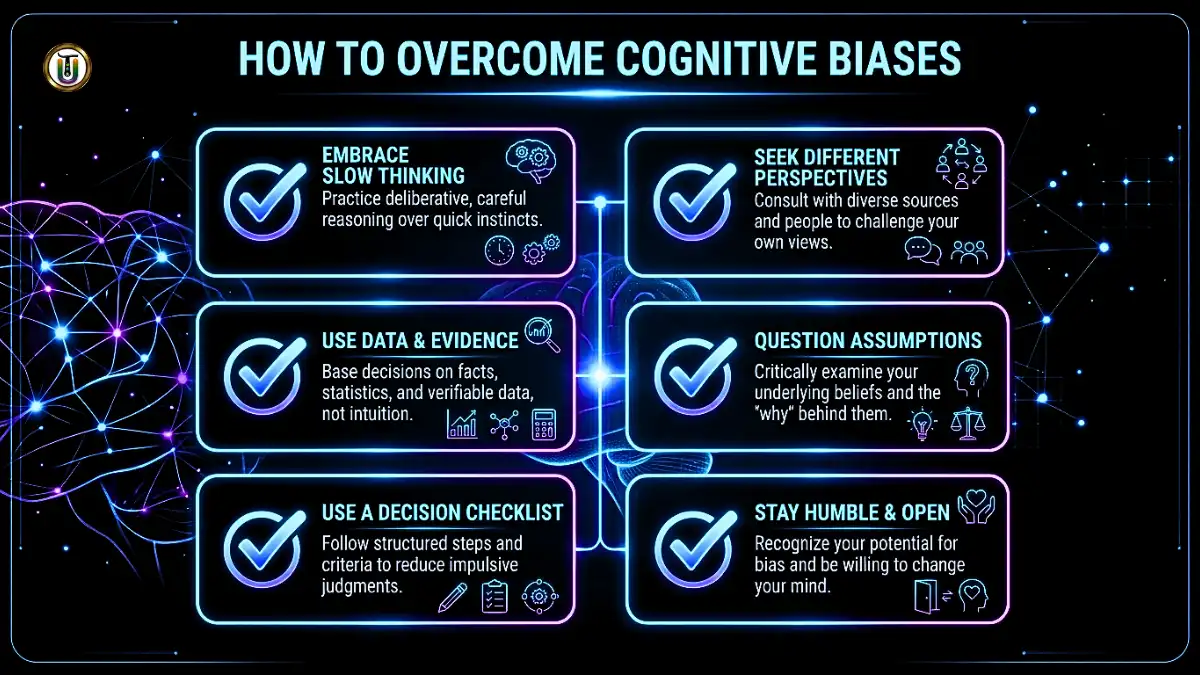
1. Slow Down Decisions
Taking time to analyze information reduces reliance on automatic thinking.
2. Seek Different Perspectives
Listening to opposing viewpoints challenges assumptions and reduces blind spots.
3. Use Data and Evidence
Evidence-based reasoning helps counter emotional decision-making.
4. Keep a Decision Journal
Recording decisions and their outcomes helps identify recurring thinking patterns.
5. Question First Impressions
Initial judgments are often influenced by bias.
6. Use Structured Decision Tools
Checklists, decision matrices, and analytical frameworks improve objectivity.
Key Takeaways
- Cognitive biases are systematic thinking errors that affect human judgment.
- They arise from mental shortcuts that simplify complex information.
- More than 180 cognitive biases have been identified by researchers.
- These biases influence decisions, memory, perception, and social interactions.
- Awareness and critical thinking can significantly reduce their impact.
Conclusion
Cognitive biases are a fundamental part of human psychology. They are not flaws in intelligence but natural by-products of how the brain processes information.
While these mental shortcuts once helped humans survive in complex environments, they can sometimes distort judgment in modern life.
By learning to recognize cognitive biases, individuals can improve their ability to:
- Evaluate information objectively
- make better decisions
- avoid manipulation
- understand human behavior more clearly
The more aware you become of these hidden influences, the better equipped you are to think critically and navigate an increasingly complex world.
Frequently Asked Questions About Cognitive Biases
What is a cognitive bias in simple terms?
A cognitive bias is a mental shortcut that affects how people interpret information and make decisions. Instead of carefully analyzing every situation, the brain uses quick judgments based on past experiences, emotions, and assumptions. These shortcuts can save time but sometimes lead to inaccurate conclusions.
How many cognitive biases exist?
Psychologists have identified more than 180 cognitive biases that influence thinking and decision-making. Many of these biases are organized within the framework known as the Cognitive Bias Codex, which groups biases based on how the brain processes information.
What are the most common cognitive biases?
Some of the most widely recognized cognitive biases include:
Anchoring Bias
Confirmation Bias
Availability Heuristic
Loss Aversion
Halo Effect
Dunning–Kruger Effect
Sunk Cost Fallacy
Overconfidence Bias
Survivorship Bias
Framing Effect
These biases influence everyday decisions in areas such as finance, relationships, politics, and consumer behavior.
Can cognitive biases be eliminated?
Cognitive biases cannot be completely eliminated because they are built into the way the human brain works. However, their effects can be reduced by slowing down decisions, seeking different perspectives, using data instead of intuition, and becoming aware of common thinking errors.
Why are cognitive biases important to understand?
Understanding cognitive biases helps people make better decisions, evaluate information more critically, and avoid manipulation. It is especially useful in fields such as business, investing, psychology, marketing, and public policy.
Who discovered cognitive biases?
The modern study of cognitive biases was largely developed by psychologists Mr. Daniel Kahneman and Mr. Amos Tversky. Their research on heuristics and decision-making revolutionized behavioral economics and psychology.
How can I suggest/provide feedback on this article?
You can reach us by filling out our contact us form.