
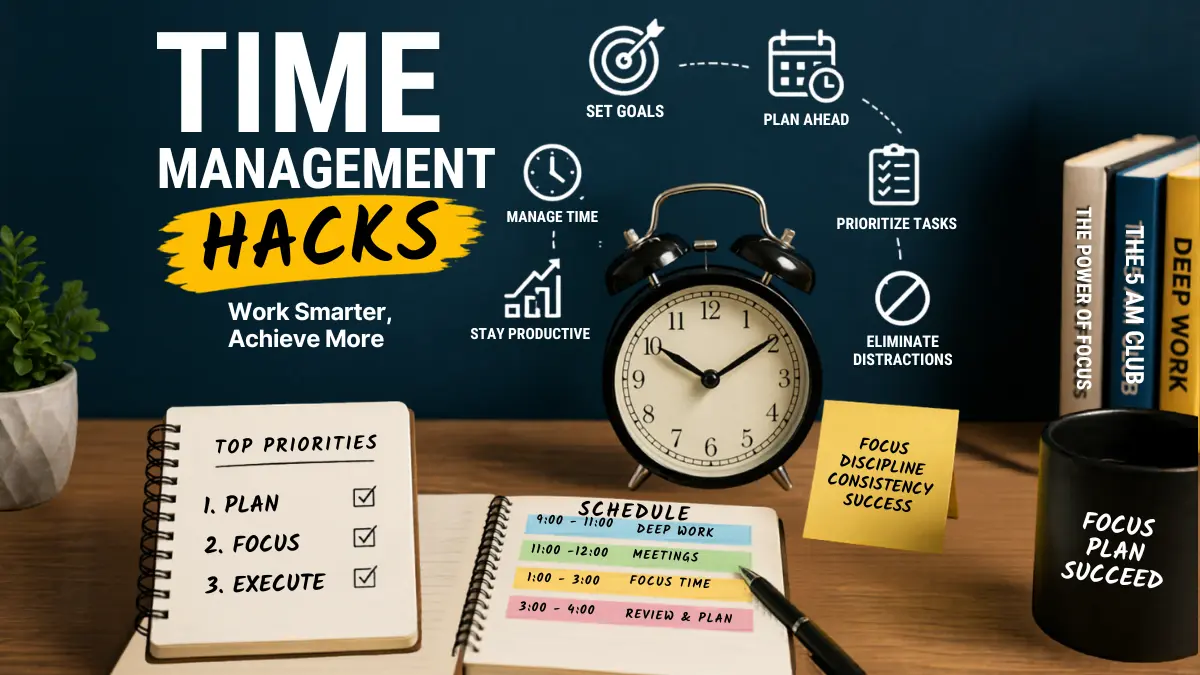
Time Management Hacks are about to align you whole day with proper time-table. Time is one of the most limited resources. Everyone has the same 24 hours, yet outcomes differ widely. The difference often lies in how time is managed.
Effective planning is not about doing more tasks. It is about doing the right tasks at the right time. Many people feel busy but still remain unproductive. This happens due to poor prioritization, distractions, and lack of structure.
The good news is that improving time control does not require complex systems. Simple changes can deliver strong results. The following practical methods can help improve focus, reduce stress, and increase output.
Start With Clear Priorities
Not all tasks are equal. Some create high value, while others consume time without impact.
Use the priority rule:
Important and urgent tasks first
Important but not urgent tasks next
Avoid low-value tasks
This approach ensures that energy is spent on meaningful work.
Use the Two-Minute Rule
If a task takes less than two minutes, complete it immediately. Small tasks often pile up and create mental clutter.
Quick action prevents delay and builds momentum.
Plan Your Day in Advance
Planning the next day before sleep improves clarity. It reduces decision fatigue in the morning.
Keep a simple list:
Top 3 important tasks
Secondary tasks
Optional tasks
This structure keeps the day focused and realistic.
Apply Time Blocking
Time blocking means assigning fixed time slots to tasks.
Example:
9:00–11:00: Deep work
11:00–12:00: Meetings
2:00–3:00: Emails
This method reduces multitasking and increases concentration.
Limit Distractions
Distractions are the biggest barrier to productivity.
Common distractions include:
Mobile notifications
Social media
Unplanned conversations
Solutions:
Turn off notifications
Use focus mode
Work in a quiet space
Even small interruptions reduce efficiency.
Follow the 80/20 Principle
A small number of tasks often produce the majority of results.
Identify:
Tasks that create real progress
Tasks that only keep you busy
Focus on high-impact work.
Use a Task Time Tracker
Tracking time helps understand where it is spent.
Benefits of tracking:
Identify time waste
Improve planning accuracy
Increase accountability
Many professionals use simple tools or apps to track daily activity.
Take Regular Breaks
Continuous work reduces efficiency over time.
Use structured breaks:
Work for 25–50 minutes
Take a 5–10 minute break
Short breaks refresh the mind and improve focus.
Learn to Say No
Overcommitment leads to stress and poor performance.
Before accepting tasks, ask:
Is this necessary?
Does this align with my goals?
Saying no protects valuable time.
Review Your Day
Daily review helps improve future planning.
Ask:
What was completed?
What was delayed?
What can be improved?
This habit builds awareness and consistency.
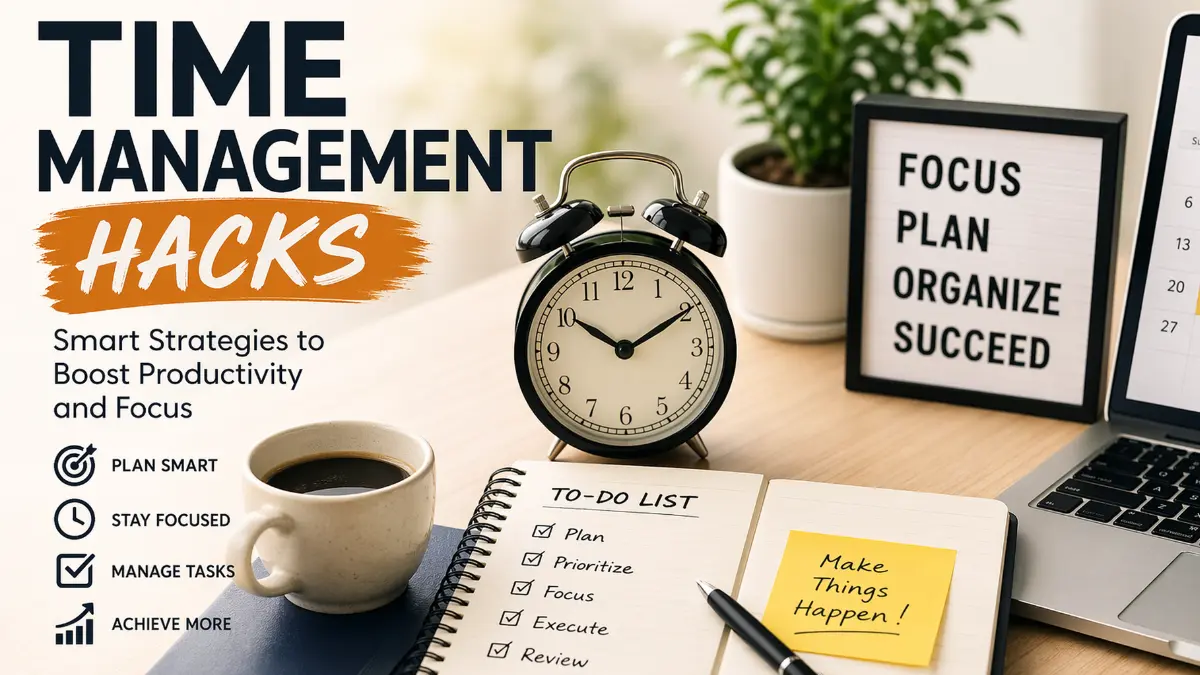
Types of Time Management Approaches
Structured Planning
Uses schedules, planners, and fixed routines. Best for disciplined individuals.
Flexible Planning
Allows adjustments based on changing priorities. Suitable for dynamic work environments.
Goal-Based Management
Focuses on long-term objectives. Tasks are aligned with goals.
Task-Based Management
Focuses on completing a list of tasks. Simple but may lack prioritization.
Energy-Based Management
Schedules tasks based on energy levels. High-focus work is done during peak hours.
Benefits
Improved Productivity
Better planning leads to higher output in less time.
Reduced Stress
Clear structure reduces confusion and pressure.
Better Work-Life Balance
Efficient work creates more free time.
Strong Decision Making
Prioritization improves clarity.
Increased Focus
Reduced distractions enhance concentration.
Goal Achievement
Consistent action leads to long-term success.
Conclusion
Managing time effectively is a skill that can be developed. It does not require perfection. It requires consistency.
Small improvements in planning, focus, and prioritization can create significant results over time. By applying simple methods like time blocking, tracking, and daily review, it becomes easier to stay organized and productive.
The key is to start with one or two techniques and build gradually.
FAQ (Frequently Asked Questions About Time Management hacks/strategies)
What is time management?
It is the process of planning and controlling how time is spent on tasks.
Why is time management important?
It improves productivity and reduces stress.
What are simple time management hacks?
Planning ahead, limiting distractions, and tracking time are effective methods.
How can I improve focus?
Reduce distractions and use structured work intervals.
What is a task time tracker?
It is a tool used to monitor how much time is spent on tasks.
Is multitasking effective?
No. It reduces efficiency and increases errors.
How many tasks should I plan daily?
Focus on 3–5 important tasks.
What is time blocking?
It is a method of assigning fixed time slots to tasks.
How do I avoid procrastination?
Break tasks into smaller steps and start immediately.
Can time management reduce stress?
Yes. Proper planning creates clarity and control.
How can I suggest/provide feedback on this article?
You can reach us by filling out our contact us form.
Sources and References
https://www.mindtools.com/pages/article/newHTE_00.htm
https://todoist.com/productivity-methods/time-blocking
https://www.coursera.org/articles/time-management
https://www.indeed.com/career-advice/career-development/time-management-skills
https://www.healthline.com/health/productivity/time-management