
Every day, people make choices that seem logical on the surface. Yet many actions happen for reasons hidden beneath awareness. Human behavior is shaped by emotions, habits, social influence, past experiences, and mental shortcuts.
Many people think behavior is simple. Someone smiles because they are happy. Someone becomes angry because of a situation. Reality is often more complex.
At Universal Thrill, Where Curiosity Meets Clarity, understanding behavior means looking beneath obvious actions and discovering the psychology behind everyday decisions.
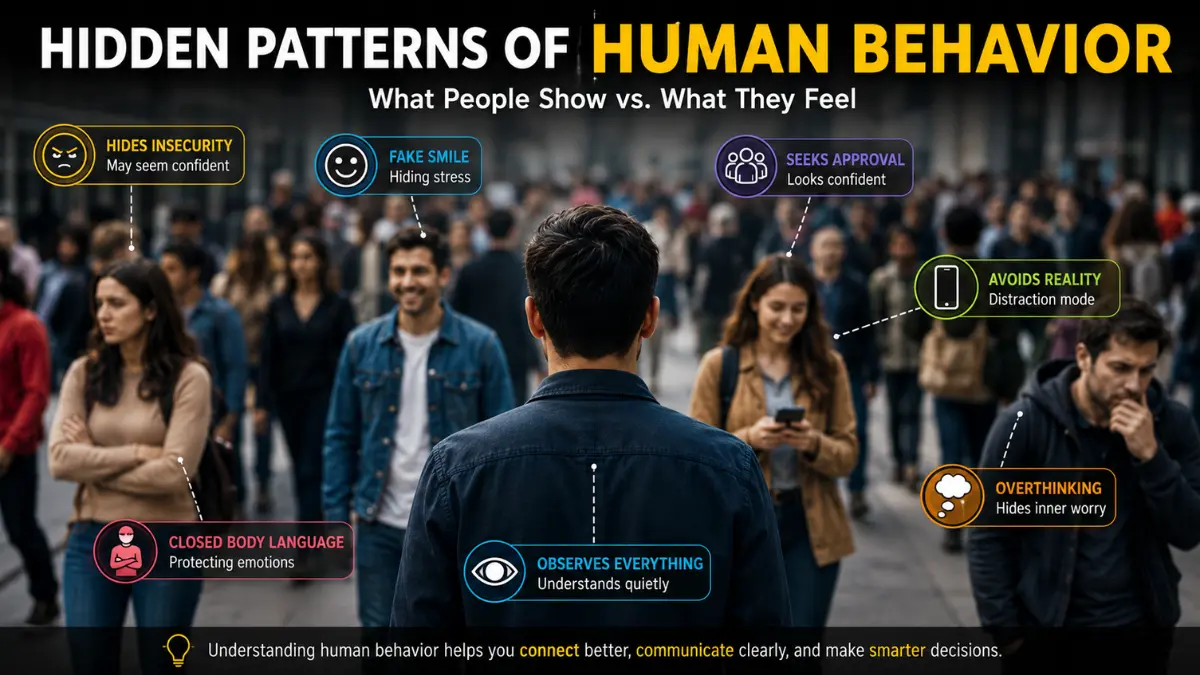
Learning how behavior works helps improve relationships, communication, decision-making, and self-awareness.
What Is Human Behavior?
Human behavior refers to the actions, reactions, and responses people show in different situations. Behavior can be influenced by:
- Emotions
- Environment
- Social pressure
- Personality
- Experiences
- Biological factors
The study of human behavior psychology examines why people react differently under similar conditions.
For example, two people may face the same challenge:
One person sees opportunity.
Another sees danger.
The event remains the same. Interpretation changes behavior.
1. People Seek Social Approval
Humans evolved in groups. Historically, being accepted increased survival chances.
This created a deep desire for approval.
Today this appears through:
- Social media validation
- Fear of criticism
- Following trends
- Trying to fit into groups
The need for acceptance strongly shapes human behavior explained through social psychology.
People often change opinions to avoid rejection.
Why Humans Copy Others
Humans naturally imitate behavior.
Examples include:
- Fashion trends
- Speaking styles
- Buying decisions
- Workplace culture
This psychological effect is called social proof.
When uncertain, people look at others for guidance.
This explains why crowded restaurants attract more customers than empty ones.
2. Emotions Often Control Decisions
Many decisions appear rational.
However, emotions frequently influence choices first.
Logic often arrives later.
Research in behavioral psychology shows emotions strongly impact:
- Spending habits
- Relationships
- Career choices
- Risk-taking behavior
Understanding psychology of human behavior helps people recognize emotional decision patterns.
3. Habits Run Daily Life
A large portion of daily actions happen automatically.
Examples:
- Morning routines
- Phone checking habits
- Eating patterns
- Repeated behaviors
Habits reduce mental effort.
The brain prefers efficiency.
Small repeated actions gradually become long-term behavior patterns.
Hidden Human Behaviors Most People Miss
Several subtle patterns affect everyday life.
Confirmation tendency
People prefer information supporting existing beliefs.
Emotional mirroring
People unconsciously copy emotional states around them.
Selective attention
People notice information matching priorities.
These hidden patterns help explain hidden human behaviors found in everyday interactions.
4. Body Language Reveals More Than Words
Communication involves much more than speech.
Body language often includes:
- Facial expressions
- Eye contact
- Hand movement
- Posture
- Personal space
People may say one thing while body signals communicate something different.
Behavioral experts frequently study nonverbal communication.
5. Stress Changes Behavior
Stress affects thinking and emotional reactions.
Under pressure people may:
- Become impatient
- Avoid decisions
- React emotionally
- Lose focus
Long-term stress changes behavior patterns and decision quality.
Recognizing stress triggers improves emotional control.
6. Environment Shapes Human Actions
Behavior changes based on surroundings.
Examples include:
- Clean spaces increase productivity
- Music affects mood
- Crowds influence decisions
- Lighting changes emotional states
Environment silently guides many actions.
This principle explains why stores carefully design layouts.
7. Self-Identity Directs Actions
People behave in ways consistent with personal identity.
Examples:
Someone believing:
“I am disciplined” acts differently from someone thinking:
“I always fail.”
Identity influences:
- Habits
- Motivation
- Confidence
- Persistence
Behavior often follows self-image.
Changing identity can create long-term improvement.
Conclusion
Human behavior is not random. Thoughts, emotions, environments, and social influence work together to shape actions.
Understanding why humans behave the way they do creates better communication, stronger relationships, and improved decisions.
Universal Thrill continues exploring psychology concepts that transform curiosity into understanding.
FAQ
Why is human behavior important?
Human behavior helps explain decisions, emotions, and social interactions.
Can human behavior change?
Yes. Habits, experiences, environments, and awareness can gradually change behavior.
What affects behavior most?
Multiple factors influence behavior including emotions, environment, personality, and social experiences.
Is behavior learned or natural?
Both biological and learned factors influence human behavior.
How can I suggest/provide feedback on this article?
You can reach us by filling out our contact us form.
Sources & References
Thinking, Fast and Slow — Daniel Kahneman