
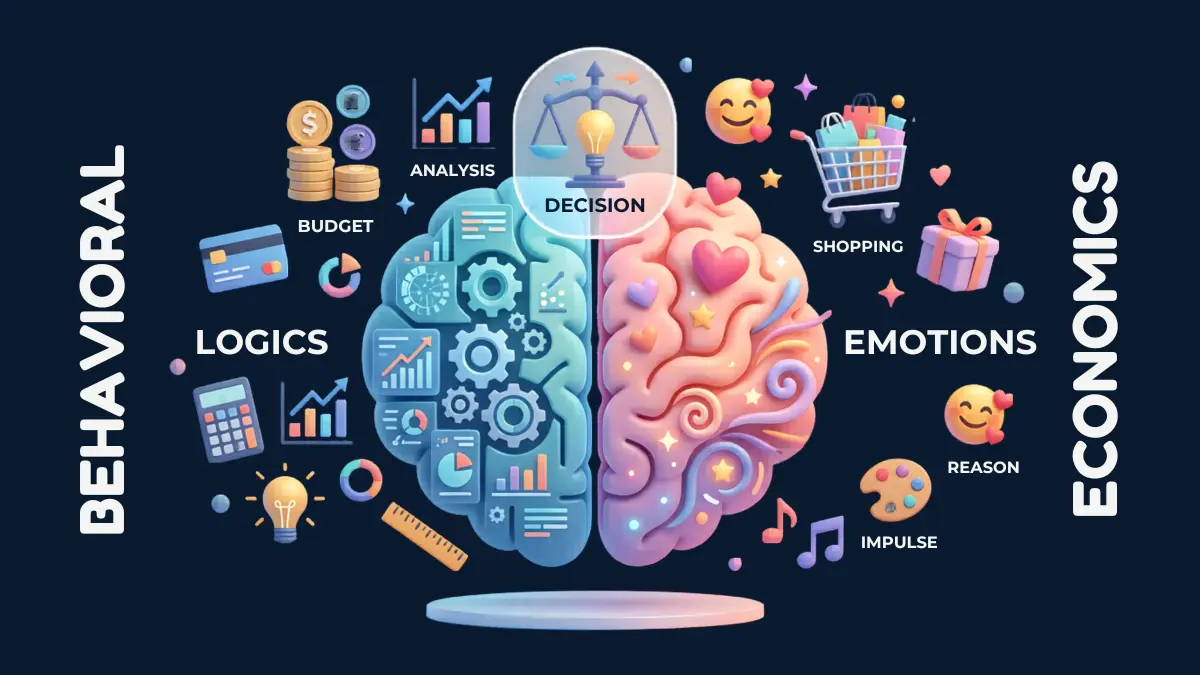
Behavioral economics studies how people make decisions in real life. It combines psychology and economics. It explains why people do not always act logically.
Traditional economics assumes people are rational. But in reality, people are emotional. They make quick decisions. They follow habits. They can influenced by surroundings.
Example:
A person buys an expensive product because it is “on sale.”
Even if they do not need it, the discount influences the decision.
This is where behavioral economics helps us understand real behavior.
What is Behavioral Economics?:
Behavioral economics is the study of how emotions, biases, and mental shortcuts affect decisions.
It challenges the idea that humans always make perfect choices. Instead, it shows that decisions are often imperfect.
It focuses on:
Human psychology
Cognitive biases
Emotional influence
Social factors
Example:
A person prefers ₹100 today instead of ₹150 after a month.
This shows impatience and emotional preference over logical gain.
What is the Requirement of Economic Behavior?
Behavioral economics is important because traditional models fail to explain real human behavior.
People:
Do not always think logically
Are influenced by emotions
Follow habits instead of analysis
This field helps in:
Improving policies
Better marketing strategies
Smarter financial planning
Better personal decisions
Example:
Governments use behavioral nudges to increase tax compliance.
Simple reminders increase payment rates.
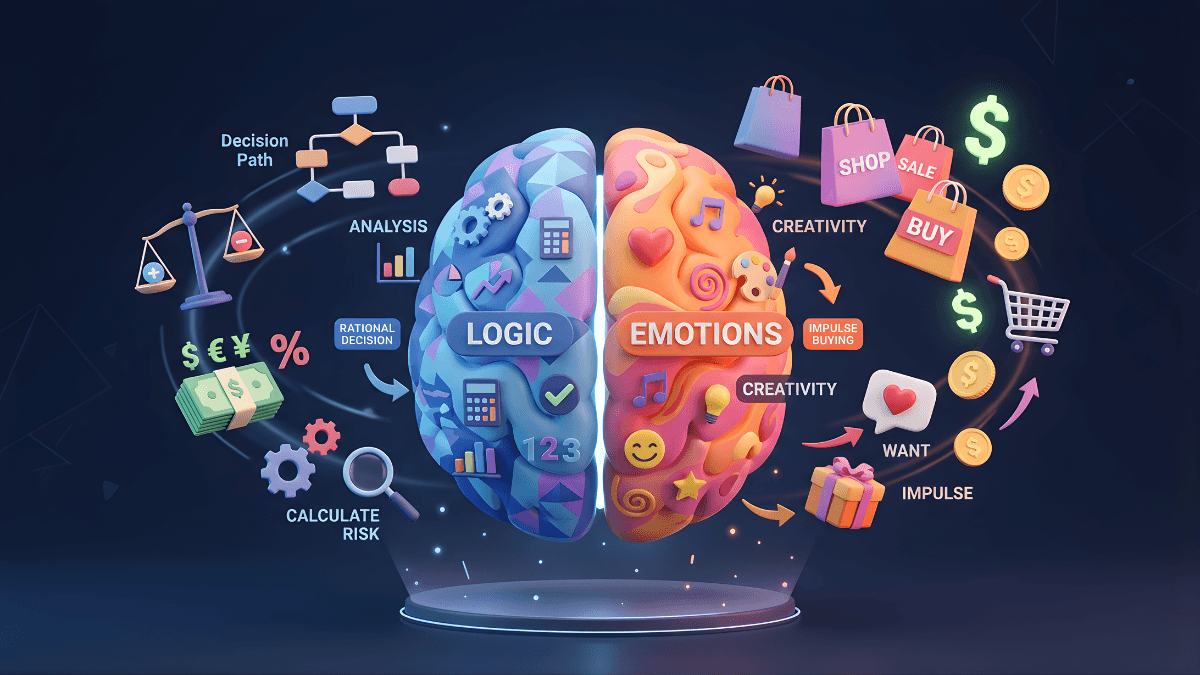
How to Implement Behavioral Economics?:
Behavioral economics can be applied in daily life and business.
- Use Nudging: Guide people without forcing them.
Example: Placing healthy food at eye level increases healthy choices. - Simplify Choices: Too many options confuse people.
Example: Reducing subscription plans increases conversions. - Use Defaults: People follow default settings.
Example: Auto-enrollment in savings plans increases participation. - Frame Information: Presentation affects decisions.
Example: “90% success rate” sounds better than “10% failure rate.” - Reduce Friction: Make actions easy.
Example: One-click purchase increases sales.
Major Types of Human Economic Behavior:
List of Types of human behavior economics:
- Loss Aversion
- Anchoring Bias
- Framing Effect
- Herd Behavior
- Present Bias
- Endowment Effect
- Mental Accounting
- Availability Heuristic
- Confirmation Bias
- Status Quo Bias
1. Loss Aversion:
People fear losses more than gains.
Example: Losing ₹100 feels worse than gain ₹100.
2. Anchoring Bias:
People rely heavily on the first piece of information.
Example: If a product is shown as ₹5000 crossed to ₹3000, ₹3000 feels cheap.
3. Framing Effect:
The way information is presented can change decisions.
Example: “95% fat-free” is more attractive than “5% fat.”
4. Herd Behavior:
People follow what others are doing.
Example: You Buy a product just because of it is trending.
5. Present Bias:
People prefer immediate rewards over future benefits.
Example: Eating junk food now instead of staying healthy later.
6. Endowment Effect:
People value what they own more than its actual worth.
Example: Selling your own phone at a higher price than market value.
7. Mental Accounting:
People treat money differently according to income source.
Example: Spending bonus money more freely than salary.
8. Availability Heuristic:
People judge based on easily recalled information.
Example: Fear of flights after hearing about a crash.
9. Confirmation Bias:
People look for information that supports their beliefs.
Example: Ignoring facts that oppose personal opinions.
10. Status Quo Bias:
People prefer to keep things the same.
Example: Not switching banks even if better options exist.
Key Takeaways:
People are not always rational
Emotions strongly affect decisions
Small changes can influence behavior
Biases impact everyday choices
Behavioral economics improves decision-making
Conclusion:
Behavioral economics helps us understand real human behavior. It explains why people make irrational choices.
By understanding biases and emotions, better decisions can be made. Businesses can improve strategies. Governments can design better policies.
Small psychological insights can create big changes.
Frequently Asked Questions About Behavioral Economics:
What is behavioral economics in simple terms?
It studies how psychology affects economic decisions.
Why behavioral economics is important?
It explains real human behavior and improves decision-making.
What are examples of behavioral economics?
Discount offers, default settings, and social influence.
How it can be used in business?
To improve marketing, pricing, and customer experience.
What is a nudge?
A small change that influences behavior without forcing it.
How is behavioral economics different from traditional economics?
Traditional economics assumes rational decisions. Behavioral economics considers emotions and biases.
What are cognitive biases in behavioral economics?
They are mental shortcuts that affect judgment and decisions.
What is the role of decision psychology in behavioral economics?
Psychology explains how emotions and thinking patterns influence choices.
Can behavioral economics improve personal finance?
Yes. It helps in saving, budgeting, and avoiding impulsive spending.
What is an example of a nudge in real life?
Automatic enrollment in retirement savings plans.
How does behavioral economics affect marketing?
It helps businesses influence customer decisions using pricing, design, and messaging.
What is bounded rationality?
It means people make decisions with limited information and time.
What is the framing effect in simple words?
People react differently based on how information is presented.
Is behavioral economics used by governments?
Yes. Governments use it to design better public policies.
What is choice overload?
Too many options make decision-making difficult.
How does social proof work in behavioral economics?
People follow others’ actions when making decisions.
What is default bias?
People prefer pre-selected options.
Can behavioral economics help in health decisions?
Yes. It can encourage healthy habits like exercise and diet control.
How does behavioral economics apply to investing?
It explains emotional investing and market behavior.
What is decision fatigue?
Making too many decisions reduces the quality of choices.
Can behavioral economics reduce bad habits?
Yes. It helps design systems to avoid impulsive behavior.
How does behavioral economics help businesses?
It improves pricing, product design, and customer engagement.
What is status quo bias?
Preference to keep things unchanged.
Is behavioral economics scientific?
Yes. It is based on research and experiments.
What industries use behavioral economics?
Finance, healthcare, marketing, public policy, and education.
How can I suggest/provide feedback on this article?

You can reach us by filling out our contact us form.
Sources and References:
- https://www.behavioraleconomics.com/resources/introduction-behavioral-economics/
- https://www.investopedia.com/terms/b/behavioraleconomics.asp
- https://www.economicshelp.org/blog/143824/economics/behavioral-economics/
- https://www.oecd.org/behavioural-insights/
- https://hbr.org/topic/behavioral-economics

7 Powerful Memory Hacks That Improve Recall Instantly and Stop Forgetting Important Things
Have you ever walked into a room and forgotten why you went there? Or struggled…

7 Powerful Hidden Behaviors People Show Secretly Every Day (And Why Your Brain Misses Them)
Human beings are fascinating. We believe we understand ourselves well. We think our actions are…

7 Powerful Human Behavior Secrets That Explain Why People Act the Way They Do
Every day, people make choices that seem logical on the surface. Yet many actions happen…