
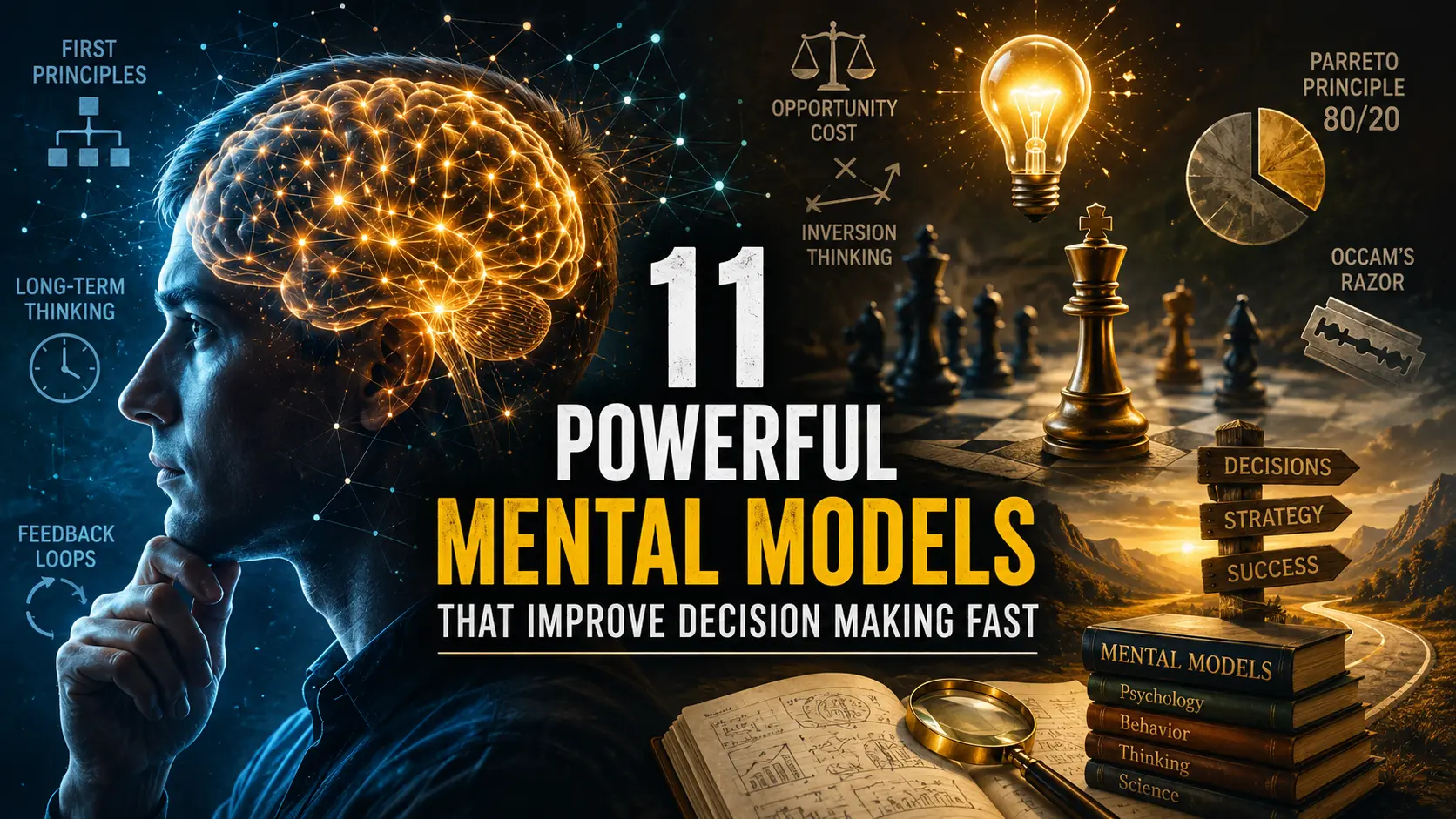
Every day, people make hundreds of decisions. Some are simple. Others shape careers, relationships, money, and health. The problem is that the human brain often relies on emotions, habits, and incomplete information.
This is where mental models become valuable.
Mental models are frameworks that help people understand how the world works. They simplify complex situations and improve thinking quality. Successful entrepreneurs, investors, psychologists, and leaders use these models regularly.
At Universal Thrill, where curiosity meets clarity, understanding practical thinking tools is essential for making smarter choices in everyday life.
What Are Mental Models?
A mental model is a thinking framework or concept used to interpret situations and make decisions.
Instead of reacting emotionally, mental models encourage structured thinking. They help people evaluate problems from multiple perspectives.
For example, a map is not the real world, but it helps people navigate. In the same way, mental models are simplified maps of reality.
Why Mental Models Matter
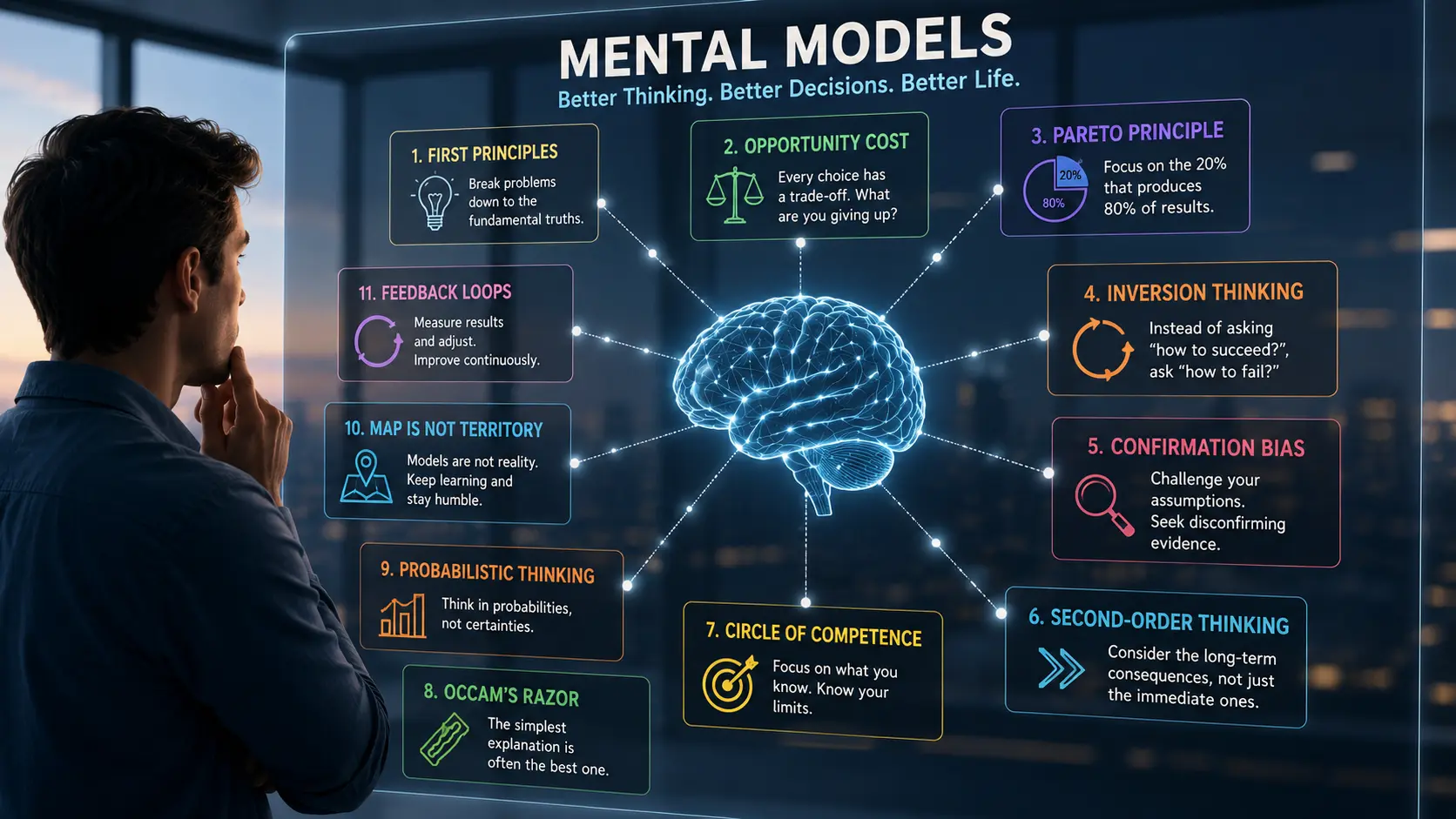
Mental models improve:
- Decision making
- Problem solving
- Critical thinking
- Risk assessment
- Learning speed
- Strategic planning
Without proper thinking frameworks, people often fall into cognitive biases and emotional mistakes.
Using the right model at the right time can completely change outcomes.
1. First Principles Thinking
First principles thinking involves breaking a problem into its most basic truths.
Instead of accepting assumptions, this model asks:
- What is fundamentally true?
- What can be rebuilt from scratch?
This approach is famously associated with Elon Musk.
Example
Instead of assuming electric batteries are expensive forever, first-principles thinking analyzes raw material costs and manufacturing possibilities.
This method encourages innovation.
2. Opportunity Cost
Every decision has a hidden cost.
Choosing one option means giving up another possible benefit. This is called opportunity cost.
Example
Spending three hours scrolling social media may cost valuable learning or productive work time.
This model helps prioritize actions more effectively.
3. The Pareto Principle (80/20 Rule)
The Pareto Principle suggests that roughly 80% of outcomes come from 20% of efforts.
Example
- 20% of habits may create 80% of personal success.
- 20% of customers may generate most business revenue.
Understanding this principle helps focus energy on high-impact activities.
4. Inversion Thinking
Most people think about how to succeed.
Inversion thinking asks:
“How can failure happen?”
By avoiding obvious mistakes, success becomes more likely.
Example
Instead of asking:
- “How do I become healthy?”
Ask:
- “What habits destroy health?”
This approach is widely associated with Charlie Munger.
5. Confirmation Bias
People naturally search for information that supports existing beliefs.
This is known as confirmation bias.
Example
Someone may only watch news sources that match personal opinions while ignoring opposing evidence.
Recognizing this bias improves objectivity and rational thinking.
6. Second-Order Thinking
Most people focus only on immediate consequences.
Second-order thinking examines long-term effects.
Example
A company cutting employee training may save money today but reduce innovation and productivity later.
This model encourages deeper analysis before making important decisions.
7. Circle of Competence
People perform better when operating within areas they truly understand.
The circle of competence model advises individuals to:
- Know what they know
- Know what they do not know
Example
An experienced doctor may avoid making financial investment decisions outside personal expertise.
This reduces unnecessary risks.
8. Occam’s Razor
Occam’s Razor suggests that the simplest explanation is often the correct one.
People sometimes overcomplicate problems with unnecessary assumptions.
Example
If a computer stops working, a dead battery is more likely than a complex internal failure.
This model improves clarity and efficiency.
9. Probabilistic Thinking
Life rarely offers absolute certainty.
Probabilistic thinking evaluates the likelihood of different outcomes instead of assuming fixed answers.
Example
Weather forecasts use probabilities because conditions constantly change.
Successful investors and analysts rely heavily on this model.
10. The Map Is Not the Territory
Reality is always more complex than descriptions or theories.
A model, chart, or explanation may help understanding, but it is never complete reality itself.
Example
Reading about swimming differs from actually entering water.
This model encourages humility and continuous learning.
11. Feedback Loops
Feedback loops help improve performance over time.
Positive feedback reinforces behavior. Negative feedback highlights problems that require correction.
Example
Athletes improve by analyzing performance mistakes after practice sessions.
Fast feedback accelerates growth and learning.
How to Apply Mental Models in Daily Life
Mental models become powerful only when consistently practiced.
Practical Ways to Use Them
During Decision Making
Ask:
- What assumptions am I making?
- What are the long-term consequences?
- What risks am I ignoring?
During Learning
Compare new ideas with existing frameworks.
During Problem Solving
Analyze situations using multiple models instead of relying on a single perspective.
Combining models often produces better results than using one alone.
Common Mistakes People Make
Using Only One Mental Model
No single framework explains everything.
Ignoring Emotional Influence
Even logical people are affected by emotions and biases.
Overconfidence
Knowledge without humility often leads to poor decisions.
The best thinkers continuously question themselves.
Mental Models Used by Successful People
Many influential individuals use structured thinking frameworks:
- Warren Buffett uses probabilistic thinking and opportunity cost.
- Charlie Munger emphasizes multidisciplinary mental models.
- Elon Musk applies first principles thinking.
These frameworks are valuable because they work across industries and situations.
Conclusion
Mental models are powerful tools for understanding reality, solving problems, and making smarter decisions. They reduce confusion and help people think more clearly in uncertain situations.
The more mental models a person understands, the better equipped they become to navigate life intelligently.
Universal Thrill continues exploring practical psychology and thinking frameworks that transform curiosity into clarity.
FAQ Section
What is a mental model?
A mental model is a thinking framework that helps people understand situations and make decisions more effectively.
Why are mental models important?
They improve critical thinking, reduce mistakes, and help people solve problems logically.
Who created mental models?
Mental models were developed across psychology, economics, philosophy, and science over many decades. No single person invented them.
What are the best mental models for beginners?
First principles thinking, opportunity cost, inversion, and the Pareto Principle are excellent starting points.
Can mental models improve daily life?
Yes. They help people make better financial, personal, and professional decisions.
How can I suggest/provide feedback on this article?
You can reach us by filling out our contact us form.