
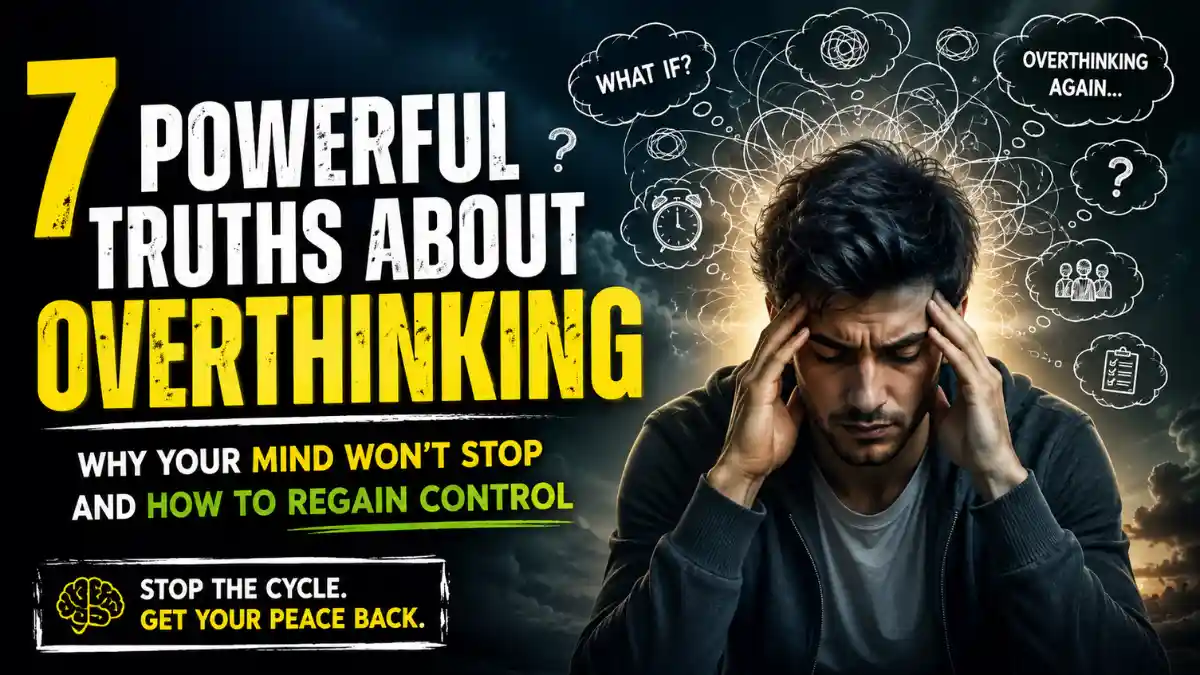
Have you ever replayed one conversation ten times in your head? Or imagined dozens of possible future problems before they even happen?
That pattern is called overthinking.
Almost everyone experiences it occasionally. But when it becomes frequent, it can quietly affect happiness, productivity, confidence, and mental clarity.
At Universal Thrill, Where Curiosity Meets Clarity, understanding the psychology behind everyday behavior helps people regain control of their thinking patterns.
It does not usually start because someone is weak. It often starts because the brain is trying to protect you.
The problem is that protection can become a trap.
What Is Overthinking?
It means repeatedly thinking about a situation, event, decision, or possibility far beyond what is useful.
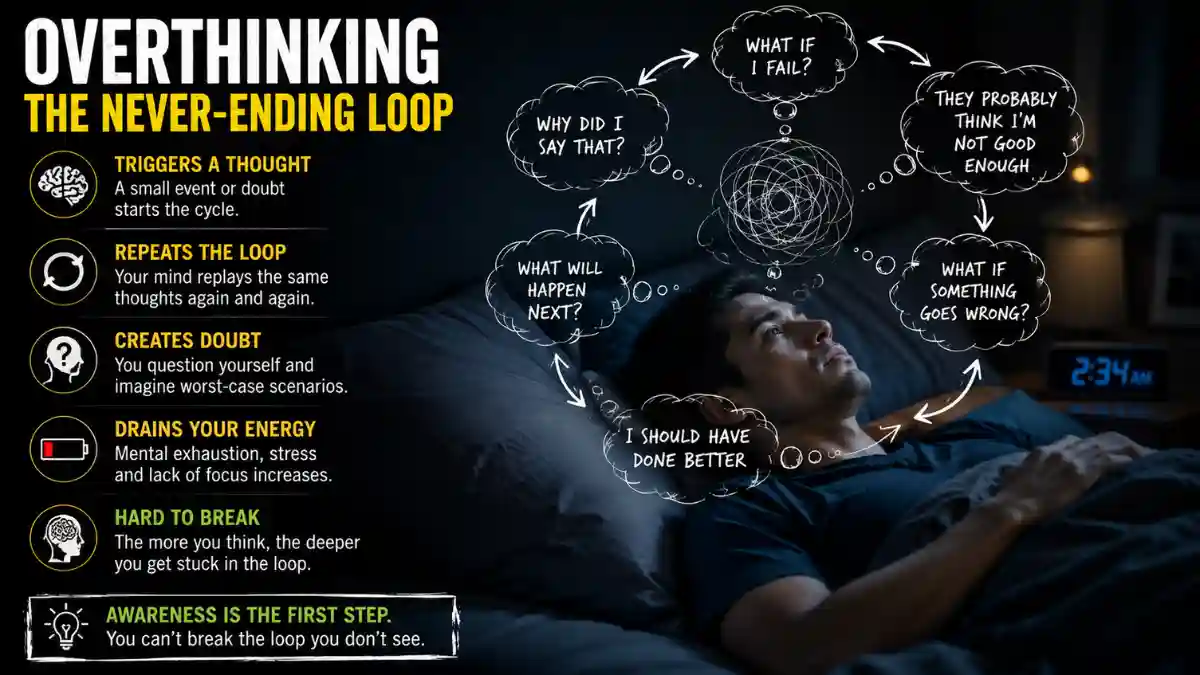
Healthy thinking solves problems.
It keeps the brain moving in circles.
Examples include:
- Replaying embarrassing moments
- Constantly analyzing conversations
- Imagining worst-case situations
- Thinking about decisions endlessly
- Predicting problems that may never happen
People often mistake overthinking for intelligence or careful planning.
But endless analysis rarely creates better decisions.
Instead, it creates mental exhaustion.
Why Overthinking Happens
1. The Brain Wants Safety
The human brain evolved to identify danger.
Long ago this protected humans from real threats.
Today many threats are psychological:
- Fear of judgment
- Fear of failure
- Fear of rejection
- Fear of uncertainty
Your brain keeps searching for answers because uncertainty feels uncomfortable.
2. Fear of Making Mistakes
Many people believe one wrong choice can destroy everything.
So the mind keeps reviewing possibilities.
Unfortunately, certainty rarely arrives.
More thinking simply creates more doubt.
3. Anxiety Increases Mental Loops
Anxiety and over-thinking often strengthen each other.
Anxious people tend to scan for potential problems.
The brain starts asking:
“What if this goes wrong?”
“What if they dislike me?”
“What if I fail?”
Soon these thoughts become automatic.
4. Information Overload
Modern life creates constant mental stimulation.
News.
Notifications.
Social media.
Messages.
Opinions.
The brain processes huge amounts of information daily.
Too much input creates mental clutter and brain fog.
Common Signs of Overthinking
Many people do not realize they are trapped in overthinking patterns.
Watch for these signs:
- Difficulty sleeping
- Constant self-doubt
- Replaying past events
- Trouble making decisions
- Mental exhaustion
- Difficulty focusing
- Imagining negative outcomes
These patterns can slowly reduce emotional energy.
The Hidden Cost of Overthinking
Overthinking feels productive.
But psychologically it often creates the opposite result.
1. Reduced Productivity
Thinking consumes mental resources.
Action becomes delayed.
Projects remain unfinished.
2. Increased Stress
The body reacts to imagined threats almost like real threats.
Stress hormones increase.
The body stays in a state of alertness.
3. Damaged Confidence
Repeated self-questioning creates doubt.
People begin trusting themselves less.
Confidence decreases over time.
4. Relationship Problems
Overanalyzing messages, expressions, or behaviors can create misunderstandings.
People sometimes invent problems that never existed.
How To Stop Overthinking
Stopping overthinking does not mean stopping thoughts.
The goal is learning when thinking stops being useful.
1. Limit Decision Time
Give yourself reasonable deadlines.
Example:
“I will think for twenty minutes and decide.”
Without limits, the brain continues searching forever.
2. Ask One Question
Instead of:
“What if everything goes wrong?”
Try:
“What evidence supports this fear?”
This shifts attention toward facts.
3. Write Thoughts Down
Writing transfers mental noise onto paper.
Many worries appear smaller after becoming visible.
4. Focus on Action
Thinking and action feel similar.
But they are not the same.
Small actions interrupt endless mental cycles.
5. Accept Uncertainty
Life rarely provides complete certainty.
Learning to tolerate uncertainty reduces mental pressure.
Healthy Reflection vs Overthinking
Healthy reflection asks:
“What can I learn?”
Overthinking asks:
“What if everything goes wrong?”
Reflection creates growth.
Overthinking creates paralysis.
The difference is direction.
One moves forward.
One moves in circles.
Final Thoughts
Overthinking often begins as an attempt to stay safe.
But when thinking becomes repetitive and endless, it creates stress rather than solutions.
Awareness is the first step.
Small changes in attention and habits can gradually create mental clarity.
Universal Thrill believes understanding human psychology helps transform confusion into practical insight.
The mind works best not when it thinks endlessly, but when it thinks clearly.
FAQ
Is overthinking a mental illness?
No. Overthinking itself is not a mental illness. However, it can appear alongside anxiety and stress-related conditions.
Why does overthinking happen at night?
Nighttime often removes distractions. Thoughts become more noticeable and mental activity may increase.
Can overthinking affect health?
Yes. Constant mental stress may contribute to sleep problems, fatigue, and emotional exhaustion.
Are intelligent people more likely to overthink?
Not always. Intelligence does not automatically cause overthinking. Fear, anxiety, and uncertainty often play larger roles.
Can overthinking be reduced?
Yes. Awareness, mindfulness, action, and structured thinking techniques can help reduce it.
How can I suggest/provide feedback on this article?
You can reach us by filling out our contact us form.
Sources & References
Thinking, Fast and Slow — Thinking, Fast and Slow — Daniel Kahneman