
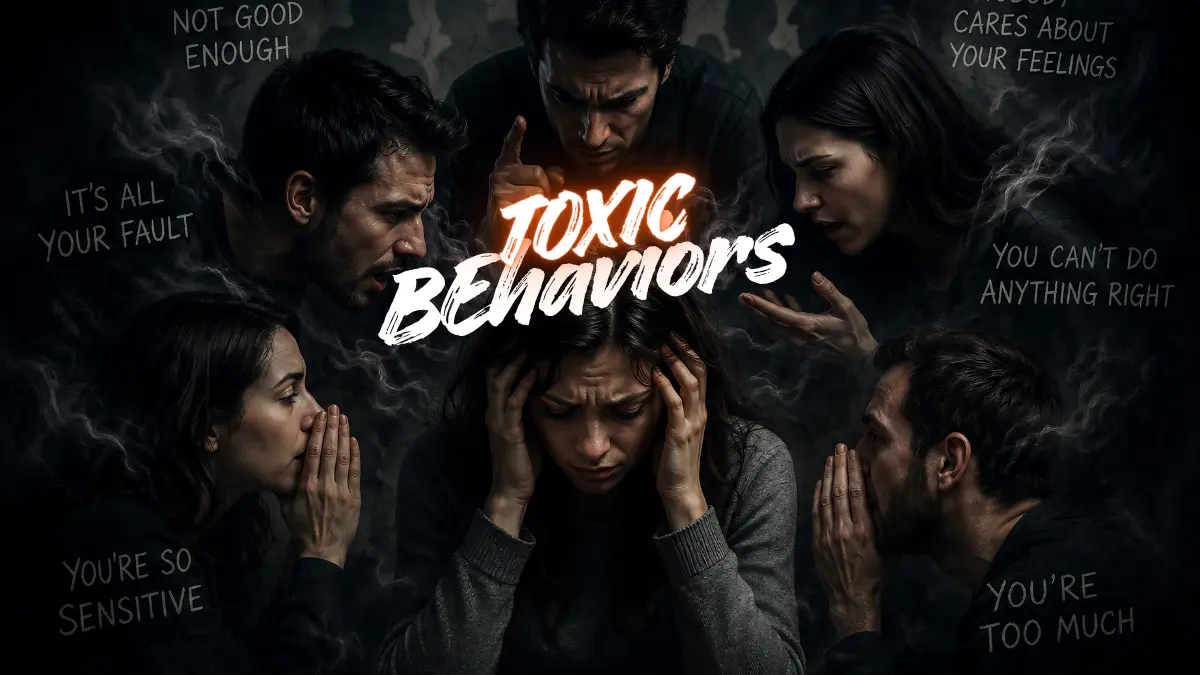
Toxic behaviors are more common than most people realize. They appear in friendships, workplaces, families, and romantic relationships. At first, these behaviors may seem harmless. Over time, however, they slowly damage trust, emotional stability, confidence, and mental peace.
Many people stay trapped in unhealthy relationships because toxic patterns often develop gradually. Manipulation, guilt, silent treatment, constant criticism, and emotional control can become normalized without people noticing the long-term damage.
At Universal Thrill, we focus on understanding human psychology in a clear and practical way so readers can recognize harmful patterns early and protect their emotional well-being.
What Are Toxic Behaviors? (Toxic people signs)
Toxic behaviors are repeated actions that emotionally harm other people. These actions create stress, insecurity, fear, confusion, or emotional exhaustion.
Not every negative action is toxic. Everyone makes mistakes. The difference is consistency. Toxic people repeatedly use damaging behaviors without taking responsibility.
These behaviors often involve:
- Emotional manipulation
- Controlling actions
- Constant negativity
- Passive aggression
- Dishonesty
- Lack of empathy
- Psychological mind games
Understanding these patterns is the first step toward protecting your mental health.
1. Constant Criticism
One of the most common toxic behaviors is constant criticism.
Constructive feedback helps people grow. Toxic criticism attacks personality, intelligence, appearance, or self-worth.
Examples include:
- “You never do anything right.”
- “Nobody else would tolerate you.”
- “You are too sensitive.”
Over time, repeated criticism lowers confidence and creates self-doubt. Victims may begin questioning their abilities and decisions.
This behavior is especially dangerous in close relationships because emotional dependence makes criticism more powerful.
2. Gaslighting
Gaslighting is a manipulation technique where someone makes another person question their memory, feelings, or reality.
Common gaslighting phrases include:
- “That never happened.”
- “You are imagining things.”
- “You are overreacting.”
Gaslighting creates confusion and emotional dependency. Victims often lose trust in their own judgment.
This is one of the most harmful toxic personality traits because it attacks psychological stability directly.
3. Silent Treatment
The silent treatment is emotional punishment through intentional ignoring.
Instead of communicating openly, toxic individuals withdraw attention and affection to gain control.
This behavior creates anxiety and emotional insecurity because humans naturally seek connection and communication.
The silent treatment is often used to:
- Avoid accountability
- Punish disagreement
- Manipulate emotions
- Gain power in relationships
Healthy communication solves problems. Emotional withdrawal usually makes them worse.
4. Excessive Control
Control is another major sign of toxic behavior.
Controlling people try to manage:
- Your decisions
- Your friendships
- Your schedule
- Your appearance
- Your emotions
At first, control may look like care or protection. Later, it becomes restriction and emotional pressure.
Examples include:
- Constant checking
- Jealous monitoring
- Demanding passwords
- Isolating someone from friends
Healthy relationships respect personal freedom and boundaries.
5. Emotional Manipulation
Emotional Manipulation involves influencing someone using guilt, fear, shame, or emotional pressure.
Manipulative people often play the victim to avoid responsibility.
They may say:
- “After everything I did for you…”
- “You do not care about me.”
- “If you leave, I will be destroyed.”
This creates emotional guilt and psychological pressure.
Over time, victims begin prioritizing the manipulator’s emotions while ignoring their own needs.
6. Passive Aggression
Passive aggression hides anger behind indirect behavior.
Instead of openly discussing problems, toxic individuals may use:
- Sarcasm
- Backhanded compliments
- Delayed responses
- Intentional procrastination
- Mocking humor
This creates emotional confusion because the hostility is indirect.
Passive-aggressive behavior damages communication and increases frustration in relationships.
7. Lack of Accountability
Healthy people accept mistakes and try to improve.
Toxic individuals often blame others for everything.
They may:
- Deny responsibility
- Shift blame
- Create excuses
- Rewrite situations
Without accountability, relationships cannot grow.
A person who never admits mistakes often repeats the same harmful actions.
8. Excessive Negativity
Constant negativity drains emotional energy.
Some toxic people continuously complain, criticize, or focus on problems. Their negativity affects everyone around them.
This behavior can increase:
- Stress
- Anxiety
- Emotional burnout
- Mental fatigue
Emotional environments strongly influence psychological health. Long-term exposure to negativity affects mood and motivation.
9. Boundary Violations
Healthy boundaries protect emotional well-being.
Toxic individuals often ignore personal limits.
Examples include:
- Reading private messages
- Forcing conversations
- Ignoring emotional space
- Pressuring decisions
- Disrespecting privacy
Boundary violations create emotional discomfort and reduce trust.
Respect is impossible without healthy boundaries.
How Toxic Behaviors Slowly Destroy Relationships

Toxic behaviors rarely destroy relationships instantly. The damage happens slowly.
At first, people justify the behavior:
- “They are stressed.”
- “They did not mean it.”
- “Maybe I am overthinking.”
Over time, emotional exhaustion builds. Trust weakens. Communication becomes defensive. Fear replaces emotional safety.
Many unhealthy relationship behaviors create a cycle:
- Conflict
- Emotional manipulation
- Temporary apology
- Repeated toxic behavior
This cycle keeps people emotionally trapped.
Why People Develop Toxic Behaviors
Toxic behaviors often develop from:
- Childhood environment
- Trauma
- Insecurity
- Fear of abandonment
- Poor emotional regulation
- Learned manipulation patterns
This explanation does not excuse harmful actions, but understanding the cause can help people recognize patterns more clearly.
Many people repeat toxic behaviors they experienced growing up.
How to Protect Yourself From Toxic People
Protecting yourself requires emotional awareness and boundaries.
Important steps include:
Recognize Patterns
Do not ignore repeated harmful actions. Patterns matter more than promises.
Set Clear Boundaries
Clearly communicate what behavior is unacceptable.
Avoid Emotional Dependency
Toxic people often exploit emotional dependence.
Trust Consistent Actions
Words can manipulate. Consistent behavior reveals true intentions.
Seek Support
Trusted friends, therapists, or support systems can provide emotional clarity.
Can Toxic People Change?
Change is possible, but only if the person genuinely accepts responsibility and consistently works on improvement.
Real change requires:
- Self-awareness
- Accountability
- Emotional maturity
- Honest communication
- Long-term effort
Temporary apologies without behavioral change usually continue the toxic cycle.
Conclusion
Toxic behaviors can slowly damage confidence, emotional stability, and relationships. Many harmful patterns hide behind manipulation, control, guilt, or emotional confusion.
Recognizing these behaviors early is essential for protecting mental health and emotional peace.
Healthy relationships are built on trust, communication, respect, and accountability. Understanding toxic personality traits helps people make better emotional decisions and create healthier environments.
At Universal Thrill — Where Curiosity Meets Clarity — the goal is to make psychology practical, understandable, and useful for everyday life.
FAQ Section
What are the biggest signs of toxic behavior?
Common signs include manipulation, constant criticism, controlling actions, gaslighting, emotional guilt, and disrespect for boundaries.
Can toxic behaviors exist in friendships?
Yes. Toxic behaviors can appear in friendships, workplaces, family relationships, and romantic relationships.
Is gaslighting a form of emotional abuse?
Yes. Gaslighting is considered emotional manipulation because it causes people to question their reality and judgment.
Why do people stay in toxic relationships?
Emotional attachment, fear, manipulation, low confidence, and hope for change often keep people trapped in unhealthy relationships.
Can therapy help toxic people improve?
Yes. Therapy can help individuals develop emotional awareness, accountability, communication skills, and healthier relationship patterns.
How can I suggest/provide feedback on this article?
You can reach us by filling out our contact us form.