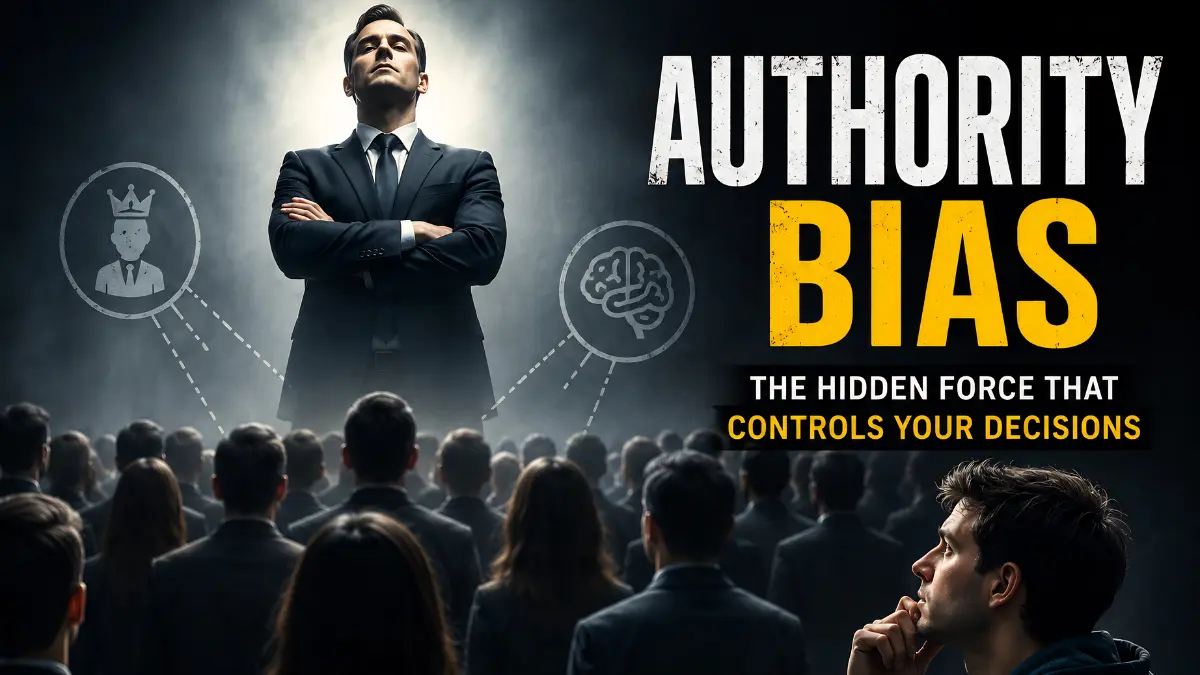
Have you ever agreed with someone simply because they sounded powerful, experienced, or confident?
That reaction is called authority bias. It happens when people automatically trust or obey authority figures without questioning their ideas, actions, or decisions. This psychological tendency affects almost everyone. It shapes buying habits, workplace behavior, political opinions, education, and even personal relationships.
In many situations, trusting experts is helpful. Doctors, teachers, scientists, and experienced leaders often provide valuable guidance. However, problems begin when authority replaces independent thinking.
At Universal Thrill, where curiosity meets clarity, understanding hidden psychological patterns helps people make smarter and more conscious decisions.
What Is Authority Bias?
Authority bias is a psychological tendency where people give greater importance to the opinion of someone perceived as powerful, knowledgeable, or influential.
This bias makes individuals believe that authority figures are automatically correct, even when evidence suggests otherwise.
The concept became widely known after famous psychological studies showed that ordinary people were willing to obey authority figures even when their actions harmed others.
Authority bias often appears because humans naturally seek structure, safety, and social approval. Following leaders can reduce uncertainty and mental effort. Unfortunately, it can also reduce critical thinking.
Why Humans Naturally Follow Authority
Humans evolved in groups where leadership increased survival chances. Listening to experienced individuals helped communities stay organized and avoid danger.
Over time, the brain developed shortcuts that associate authority with trust and safety.
Several factors strengthen authority bias:
Social Conditioning
From childhood, people are taught to obey parents, teachers, and elders. Respect for authority becomes deeply connected to social behavior.
Fear of Consequences
People may fear punishment, criticism, rejection, or conflict if they question authority figures.
Mental Convenience
Questioning every decision requires energy. Trusting authority allows the brain to save time and reduce uncertainty.
Desire for Social Acceptance
People often follow authority because everyone around them appears to do the same.
Famous Authority Bias Experiment
One of the most well-known psychology experiments related to authority bias was conducted by Stanley Milgram.
Participants were instructed by an authority figure to deliver electric shocks to another person during a learning experiment. Although the shocks were fake, participants believed they were real.
Many participants continued obeying instructions even when they thought another person was suffering.
The experiment revealed a disturbing truth: ordinary people can ignore personal morality when influenced by authority.
How Authority Bias Affects Everyday Decisions
Authority bias quietly influences daily life more than most people realize.
Workplace Decisions
Employees may avoid questioning managers even when they notice mistakes. This can create poor decisions, unethical behavior, or unhealthy workplace culture.
Workers often stay silent because authority creates psychological pressure.
Medical Situations
Patients may blindly trust doctors without asking questions about treatments, side effects, or alternatives.
While expertise matters, informed discussion is equally important.
Social Media Influence
Influencers with large audiences are often treated as experts even when they lack qualifications.
People may trust confident presentation more than actual evidence.
Marketing and Advertising
Brands frequently use celebrities, doctors, or professionals in advertisements because authority increases trust.
Consumers subconsciously assume the product is better because an authority figure recommends it.
Education Systems
Students sometimes memorize information without understanding it because teachers are viewed as unquestionable authorities.
Healthy learning requires curiosity and independent thinking.

Signs You Are Experiencing
Recognizing authority bias is the first step toward avoiding manipulation.
Here are common warning signs:
You Stop Questioning
You accept statements immediately because an expert or leader said them.
You Ignore Evidence
You dismiss facts that contradict authority figures.
You Feel Fear While Disagreeing
Questioning authority makes you uncomfortable even when concerns are valid.
You Assume Confidence Means Competence
Confident speech and status symbols create automatic trust.
You Follow Group Behavior
If everyone obeys authority, you feel pressure to do the same.
The Dangerous Side
Authority bias becomes dangerous when powerful individuals misuse trust.
History contains many examples where blind obedience caused serious harm.
Financial Scams
Fake investment experts manipulate people using status, titles, and confidence.
Toxic Leadership
Some leaders use fear and authority to silence criticism.
Political Manipulation
Authority bias can shape public opinion through emotional speeches and media influence.
Cult Behavior
Many cult leaders gain control by presenting themselves as unquestionable authorities.
Harmful Social Pressure
People may abandon personal values simply to obey authority or fit into a group.
How to Avoid Authority Biasing
Avoiding authority bias does not mean rejecting expertise. It means balancing respect with independent thinking.
Ask Questions
Do not fear asking for explanations, evidence, or alternatives.
Verify Information
Check multiple reliable sources before accepting important claims.
Focus on Evidence, Not Status
A title or position does not automatically make someone correct.
Develop Critical Thinking
Learn to analyze logic, facts, and motivations objectively.
Slow Down Decisions
Authority bias becomes stronger during emotional or rushed situations.
Encourage Healthy Discussion
Good leaders welcome thoughtful questions and constructive disagreement.
Authority Bias in the Digital Age
Modern technology has increased the power of authority bias.
Verified badges, professional branding, viral popularity, and polished content often create instant credibility.
Algorithms also amplify influential voices, making repeated opinions appear more trustworthy.
This environment makes critical thinking more important than ever.
People should evaluate information carefully instead of relying only on popularity or authority status.
Why Understanding Authority Bias Matters
Authority bias affects careers, relationships, finances, health decisions, and personal freedom.
People who understand this bias become better thinkers and decision-makers.
They learn to respect expertise without surrendering independent judgment.
Awareness creates balance. It helps individuals avoid manipulation while still benefiting from genuine knowledge and leadership.
Conclusion
Authority bias is one of the most powerful psychological influences in human behavior. It shapes how people think, obey, trust, and make decisions every day.
While authority can provide guidance and structure, blind obedience can create serious problems. The key is learning to combine respect with critical thinking.
Questioning information thoughtfully does not make someone disrespectful. It makes them aware.
At Universal Thrill, understanding psychology helps people recognize hidden influences and make clearer, smarter decisions.
FAQ Section
What is authority bias in psychology?
Authority bias is the tendency to trust or obey authority figures automatically, even without proper evidence.
What causes authority bias?
Authority bias develops from social conditioning, fear of conflict, mental shortcuts, and the human desire for structure and acceptance.
Is authority bias always harmful?
No. Trusting experts can be beneficial. Problems occur when people stop thinking critically or ignore evidence.
What are examples of authority bias?
Examples include obeying managers without questioning, trusting celebrity endorsements, or accepting information only because an expert said it.
How can people avoid authority bias?
People can avoid authority bias by asking questions, verifying information, comparing sources, and developing critical thinking skills.
How can I suggest/provide feedback on this article?
You can reach us by filling out our contact us form.