
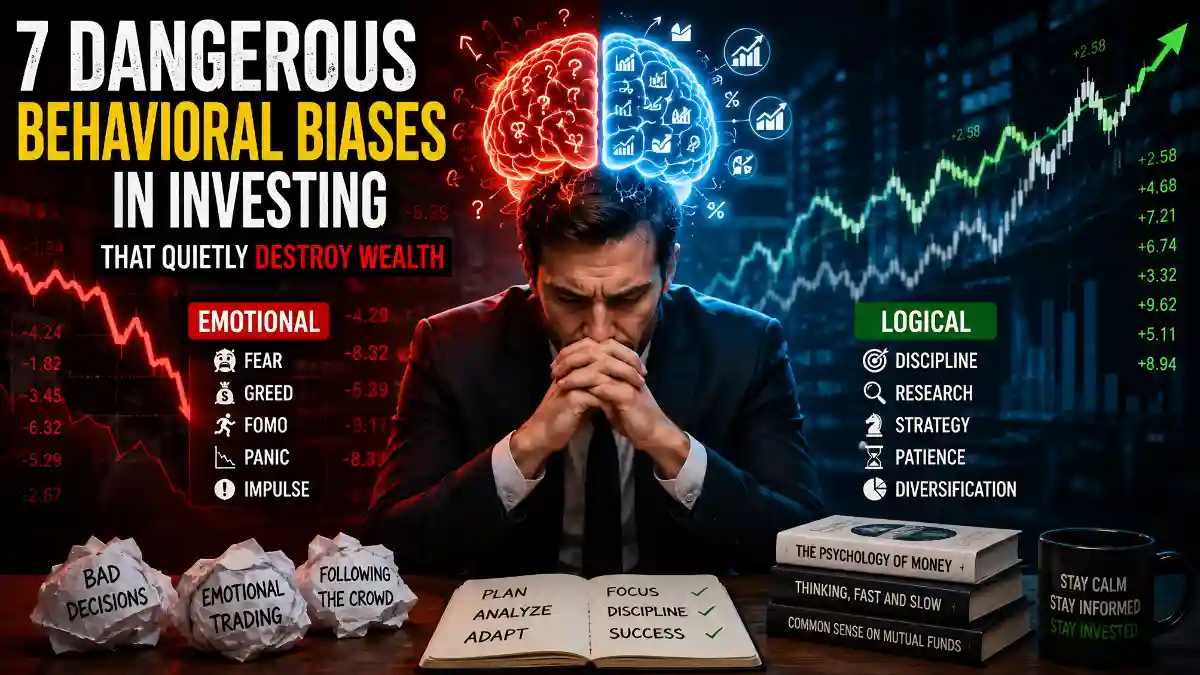
Investing is often presented as a numbers game. Many people believe success depends only on research, market analysis, and financial knowledge. However, real-world investing is deeply influenced by human psychology.
Even experienced investors make irrational decisions. Fear, greed, overconfidence, and emotional reactions often lead people toward poor financial choices. These psychological patterns are known as behavioral biases in investing.
Understanding these biases can help investors avoid major mistakes and improve long-term financial results. At Universal Thrill, where curiosity meets clarity, understanding the human side of investing is just as important as understanding financial markets.
- What Are Behavioral Biases in Investing?
- Why Human Psychology Matters in Investing
- How Behavioral Biases Hurt Investment Performance
- Practical Strategies to Reduce Behavioral Biases in Investing
- The Role of Behavioral Finance in Modern Investing
- Conclusion 🎯
- FAQ Section (Behavioral Biases in Investing)
- Sources and References
What Are Behavioral Biases in Investing?
Behavioral biases are mental shortcuts and emotional patterns that affect decision-making. In investing, these biases can distort judgment and lead to irrational actions.
Traditional finance assumes investors behave logically. Behavioral finance shows that humans are emotional and imperfect decision-makers.
These biases influence:
- Buying decisions
- Selling timing
- Risk assessment
- Portfolio diversification
- Reaction to market volatility
Many investment losses happen not because of lack of intelligence, but because emotions overpower logic.
Why Human Psychology Matters in Investing
Markets are driven by people. Since people are emotional, markets also react emotionally.
During market crashes, fear spreads rapidly. During bull markets, greed takes control. Investors often follow crowds instead of following disciplined strategies.
This creates cycles of:
- Panic selling
- Overbuying
- Speculative investing
- Market bubbles
Understanding investing psychology helps investors stay rational when emotions become extreme.
1. Overconfidence Bias
Overconfidence bias happens when investors believe they are smarter or more skilled than they actually are.
Many investors assume they can predict market movements consistently. After a few successful trades, confidence increases rapidly.
Common signs include:
- Excessive trading
- Ignoring risks
- Concentrated investments
- Believing losses “won’t happen to me”
Research shows overconfident investors often underperform because they take unnecessary risks.
How to Avoid It
- Follow a disciplined investment plan
- Diversify investments
- Review mistakes honestly
- Focus on long-term performance
2. Loss Aversion Bias
Loss aversion means people feel losses more strongly than gains.
Losing ₹10,000 usually feels more painful than the happiness created by earning ₹10,000.
Because of this, investors often:
- Hold losing stocks too long
- Sell winning investments too early
- Avoid necessary risks
This bias can damage portfolio growth over time.
Example
An investor buys shares at ₹1,000. The stock falls to ₹700. Instead of accepting the loss and moving on, the investor continues holding the stock emotionally, hoping it returns to the original price.
3. Confirmation Bias
Confirmation bias occurs when investors seek information that supports their existing beliefs while ignoring opposing evidence.
If someone believes a stock will rise, they may only read positive news about it.
This creates dangerous blind spots.
Effects of Confirmation Bias
- Ignoring warning signs
- Emotional attachment to investments
- Poor risk management
- Delayed decision-making
Smart investors actively search for opinions that challenge their assumptions.
4. Herd Mentality
Humans naturally follow crowds. In investing, this is called herd mentality.
People often buy assets simply because everyone else is buying them.
This behavior contributed to:
- Dot-com bubble
- Housing market crash
- Cryptocurrency speculation waves
Herd investing creates inflated prices and emotional decision-making.
Warning Signs
- Investing because of social media hype
- Fear of missing out (FOMO)
- Buying without research
Independent thinking is essential for long-term investing success.
5. Anchoring Bias
Anchoring bias happens when investors rely too heavily on one reference point.
Usually, investors become emotionally attached to a stock’s purchase price.
For example, if someone buys a stock at ₹500, they may believe it is “worth” ₹500 forever, even when market conditions change completely.
This prevents rational analysis.
How to Avoid Anchoring
- Focus on current fundamentals
- Ignore emotional purchase prices
- Regularly reevaluate investments
6. Recency Bias
Recency bias causes investors to give more importance to recent events than historical trends.
After a market rally, investors may believe prices will continue rising forever. After a crash, they may expect endless declines.
This bias creates emotional investing cycles.
Common Problems
- Buying near market peaks
- Selling during panic
- Ignoring long-term history
Successful investing requires a broader perspective beyond short-term market movements.
7. Availability Bias
Availability bias occurs when investors rely on easily remembered information instead of complete analysis.
News headlines, viral stories, or dramatic market events heavily influence perception.
For example:
- One company success story may create unrealistic expectations
- Recent market crashes may increase fear excessively
This can lead to distorted risk assessment.
How Behavioral Biases Hurt Investment Performance
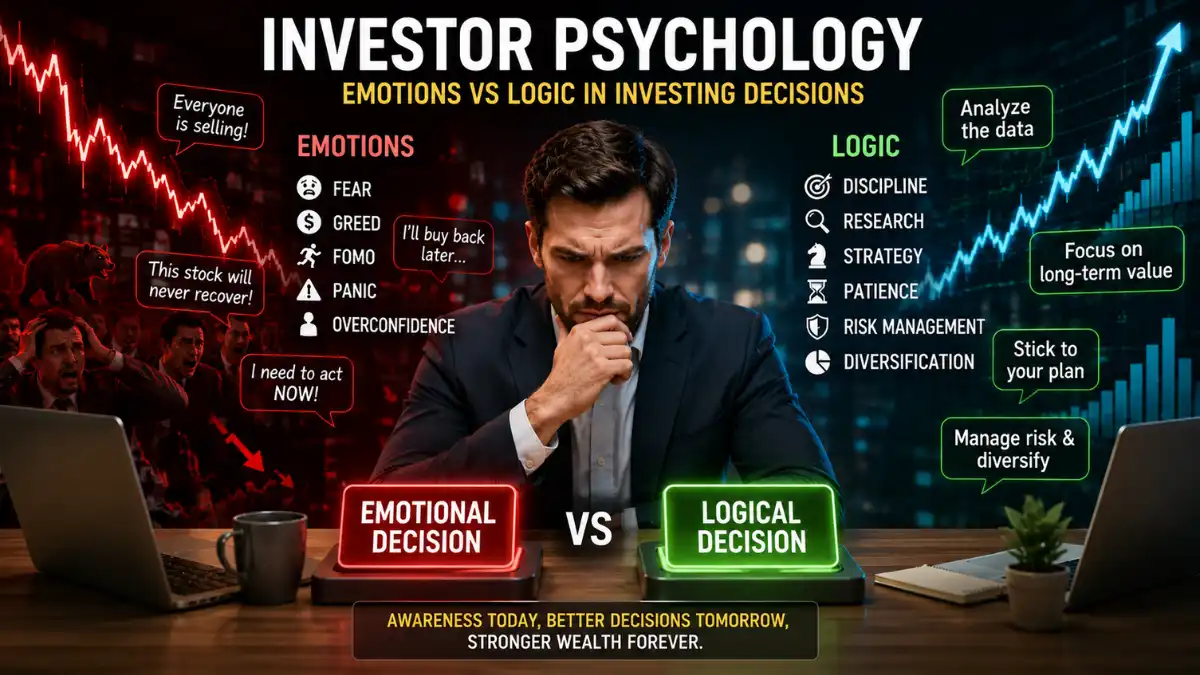
Behavioral biases can quietly reduce returns over many years.
Major consequences include:
| Bias | Possible Result |
|---|---|
| Overconfidence | Excessive risk |
| Loss aversion | Poor selling decisions |
| Herd mentality | Buying bubbles |
| Confirmation bias | Ignoring dangers |
| Recency bias | Emotional timing mistakes |
Studies in behavioral finance consistently show disciplined investors usually outperform emotional investors over time.
Practical Strategies to Reduce Behavioral Biases in Investing
Create a Written Investment Plan
A clear strategy reduces emotional decisions during market volatility.
Your plan should include:
- Investment goals
- Risk tolerance
- Diversification rules
- Exit strategies
Diversify Your Portfolio
Diversification reduces emotional pressure on individual investments.
Spreading investments across sectors and asset classes improves stability.
Focus on Long-Term Thinking
Short-term market movements are unpredictable.
Long-term investing helps reduce emotional reactions and improves decision-making quality.
Use Data Instead of Emotions
Before making decisions, ask:
- What evidence supports this investment?
- What risks exist?
- Am I reacting emotionally?
Objective analysis improves investing discipline.
Review Past Mistakes
Many successful investors maintain journals to analyze previous decisions.
Learning from mistakes helps reduce repeated emotional patterns.
The Role of Behavioral Finance in Modern Investing
Behavioral finance combines psychology and economics to understand how people make financial decisions.
It explains why markets sometimes behave irrationally.
Financial advisors and institutions now increasingly use behavioral finance principles to:
- Improve investor education
- Design better portfolios
- Reduce panic reactions
- Encourage long-term investing
Understanding psychology has become a critical part of modern wealth management.
Conclusion 🎯
Behavioral biases in investing affect nearly everyone. Intelligence alone does not guarantee successful investing. Emotional discipline matters just as much as financial knowledge.
Fear, greed, overconfidence, and crowd behavior can quietly damage long-term wealth creation. Investors who understand these psychological traps gain a major advantage.
The goal is not to remove emotions completely. The goal is to recognize emotional patterns before they control decisions.
At Universal Thrill, understanding human behavior helps transform confusion into clarity, especially in areas as important as financial decision-making.
FAQ Section (Behavioral Biases in Investing)
What are behavioral biases in investing?
Behavioral biases are psychological tendencies that influence investment decisions irrationally, often leading to emotional mistakes.
Why do investors make irrational decisions?
Human emotions such as fear, greed, and overconfidence affect judgment, especially during market volatility.
What is the most common investing bias?
Loss aversion is considered one of the most common biases because investors strongly dislike losses.
How can investors reduce emotional investing?
Creating investment plans, diversifying portfolios, and focusing on long-term goals can reduce emotional decisions.
What is behavioral finance?
Behavioral finance studies how psychology affects financial and investment decisions.
How can I suggest/provide feedback on this article?
You can reach us by filling out our contact us form.